
Elevated Seating
Fit Is Not a Feature
Adjustability is sold as if fit were something you solve after buying a chair. It is not. Fit is the starting condition, set by your proportions, desk, and work. Here is how to read your own fit envelope before you compare features.
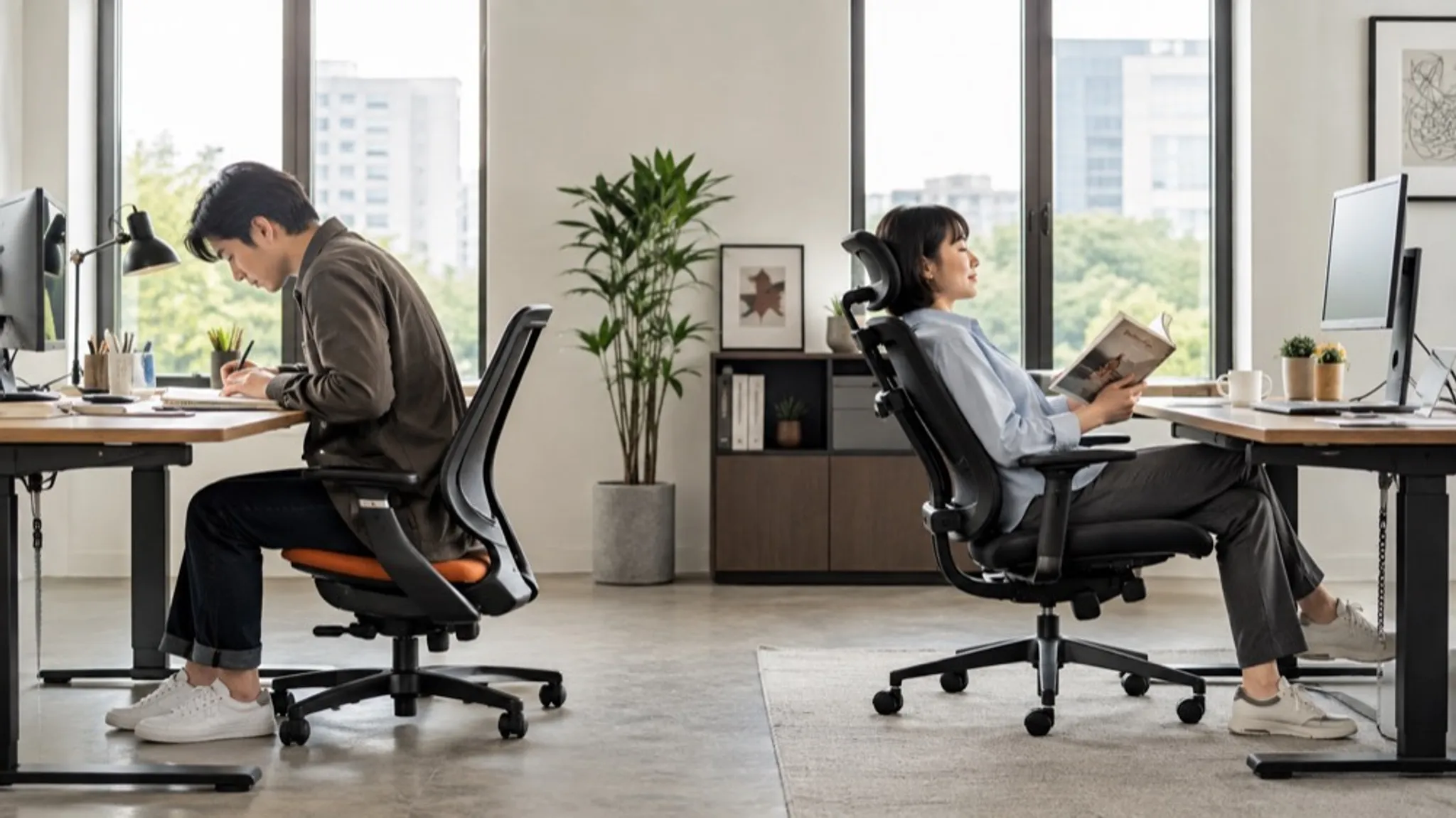
Furniture marketing turns fit into a line item. Seat depth: adjustable. Backrest: adjustable. Arms: adjustable. The list implies that fit is something you solve after buying the chair. It is not. Fit is the starting condition.
The right chair for one person can be the wrong chair for another before either of them touches a lever. Height, proportions, work surface, screen height, footwear, habits, and the kind of work being done all change what a seat needs to do. A product page can describe a mechanism. It cannot decide how someone spends eight hours.
The average user is a convenient fiction
Most chairs are designed to accommodate a range of people, which is sensible. But an adjustable range is not the same as a personal fit. A person with long thighs notices seat depth first. Someone at a high desk notices the relationship between seat height and the keyboard. Someone who moves constantly may care less about a precisely dialled-in upright position than about whether the chair stays comfortable when they lean, turn, and perch. A person who lives in video calls needs a different setup from a designer bent over a screen. None of that is a flaw in the person or the chair. It is why a feature list is an incomplete way to choose furniture, and why "ergonomic" on its own tells you so little (more on that in Why "Ergonomic" Has Become Too Vague).
Your fit envelope
There is a more useful idea hiding under the word fit. Call it your fit envelope: the small set of dimensions and habits that decide, before any adjustment, whether a chair can work for you at all. It is mostly four things.
- Your proportions. Torso-to-leg ratio and thigh length set what seat depth and back height can accommodate you.
- Your surfaces. A fixed desk, a standing desk, or several work surfaces each change the seat-height range you need.
- Your postures. Whether you work upright, forward, reclined, or all three decides how much a chair has to support movement rather than one pose.
- Your day. The task you do most, and the point in the day your current chair first bothers you, tell you what to weigh heaviest.
A useful question set follows directly from that envelope:
- How often do you change position while you work?
- Do you sit at one desk, a standing desk, or several surfaces?
- Do you work upright, forward, reclined, or a mix?
- What part of your current chair do you notice first when a day runs long?
Answering those reveals more than comparing features in isolation. It turns the purchase from a hunt for the most impressive chair into a search for one with a coherent relationship to your work and your body. The workstation as a whole is the next layer out from this.
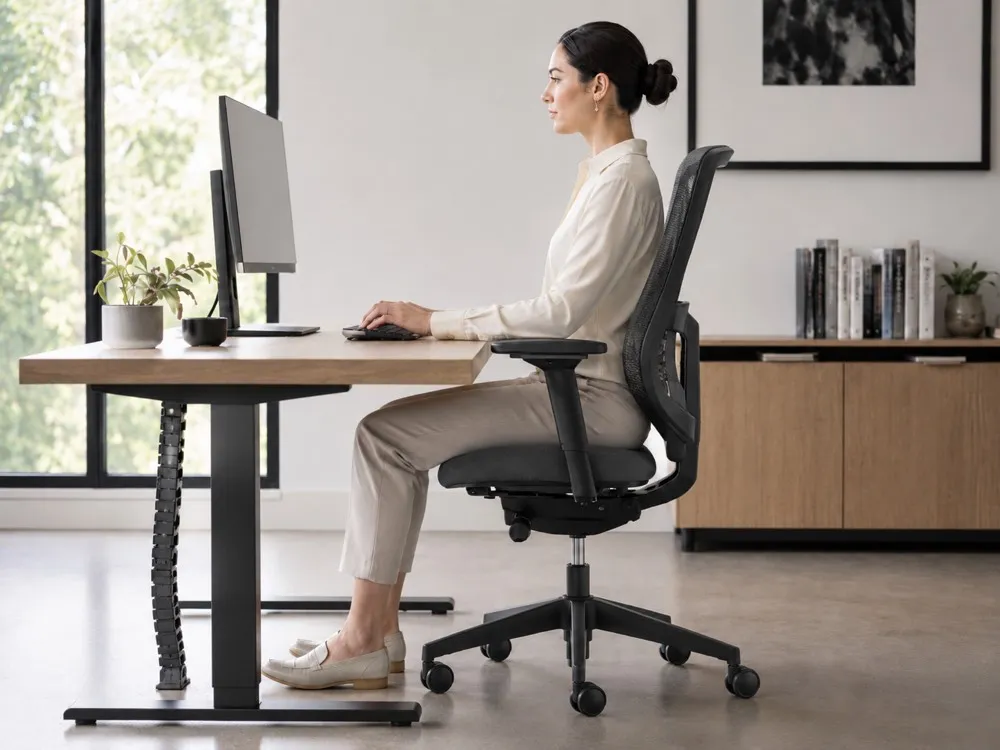
Adjustment supports fit, it does not replace it
Good adjustment is valuable; it lets a chair respond to changing tasks and bodies. But it cannot rescue a basic mismatch. A backrest that is too short does not grow tall because it has a tension control. A seat that restricts movement does not become generous because the armrests move.
The mistake is treating the number of controls as the measure of the design. A chair can be highly adjustable and still be difficult to tune. It can also be relatively simple and still make a thoughtful range of positions available.
The test is whether the adjustment stays in use
There is a quiet diagnostic available to anyone who already owns a chair. Pay attention to the controls you stop touching after the first week.
Sometimes that means the setting is simply right and needs no further thought. More often it means the control is awkward, unclear, or too disruptive to reach while the work is underway. An adjustment that interrupts the task is an adjustment most people abandon, whatever the specification sheet promises.
Useful adjustability has a rhythm to it. It supports a change in task or position without making you leave the task entirely. That standard applies to a desk as much as a chair.
This is also why trying a chair matters. Sit as you would actually use it. Lean forward. Turn. Take a call. Put your feet where they normally go. Let the careful showroom posture fall away, and what remains is a truer measure of fit.
What Levitask designs for
The Vision Chair is built around one specific kind of fit. The seat angles up to 18 degrees forward of flat, which tips the pelvis forward and opens the hip angle, and its patent-pending T-Mech™ moves that seat on a knee-pivoted arc so the thighs stay supported as you shift position. The backrest is linked to the seat and travels with it, so the open angle is held by the chair rather than by you. Some design decisions are not separate controls at all, and the movement path of the seat is one of them.
Fit here extends past the chair. Because the seat angles forward and raises your seated height, the desk has to be able to rise with it. A height-adjustable desk is part of the fit, and a fixed one at the usual 73cm is a mismatch no seat adjustment can solve.
That will not make it right for every person or every desk. It does mean the chair is not asking you to pick one position and stay there to feel its benefit, which is the whole point of Elevated Seating. For people whose days involve frequent changes of posture, that may be the fit that matters most.
Fit is not a feature to tick off. It is the reason the rest of the features exist.