Posture Science
Why 'Ergonomic' Has Become Too Vague to Be Useful
The word ergonomic now describes almost any chair, which makes it useless for a buying decision. Here are four practical lenses, fit, movement, task, and endurance, that tell you more than a feature list ever will.
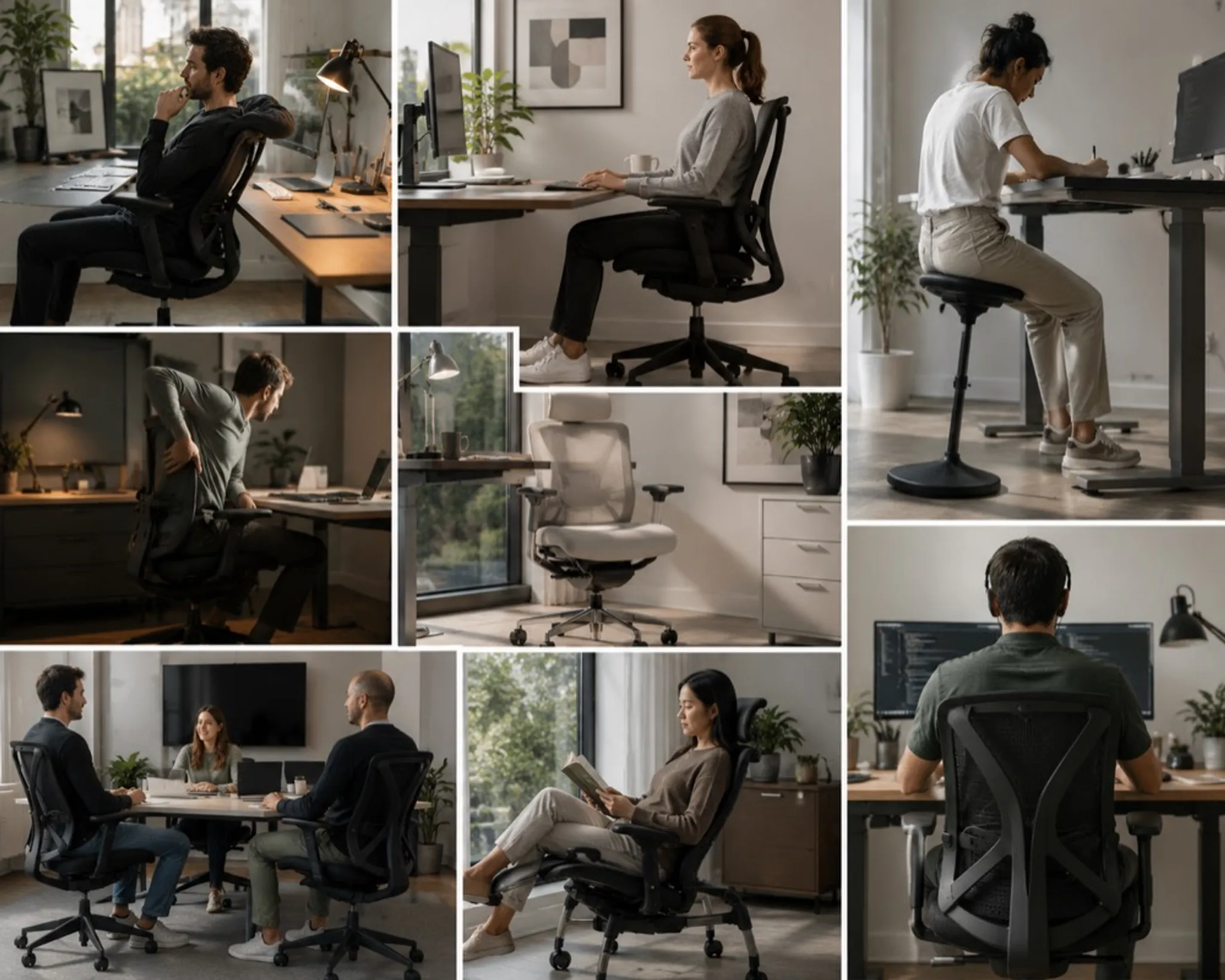
"Ergonomic" should be a useful word. In its original sense it means furniture designed around the person using it, rather than a person asked to adapt to the furniture. That is close to how Mandal framed the seated worker (Applied Ergonomics, 1981): sitting at 90 degrees is a product of furniture design, not anatomy, and a working posture is better served by something nearer a half-standing position. Ergonomics, done properly, starts from the body and the task.
In practice the word now labels almost everything. A chair is ergonomic because it has lumbar support, or adjustable arms, or a mesh back, or a headrest, or simply because it looks technical in a product photo. Each detail may be useful. None of them tells you whether the chair will work for the person sitting in it. The word is not wrong. It has just become too broad to make a decision with.
A feature list is not a working relationship
Most chair comparisons open with features: how many levers, how much adjustability, what material, whether the back reclines. These are easy to list, so they became the language of the category. But a chair is used across a day, not across a specification sheet, and the revealing questions are harder to fit in a table. Does the chair fit the desk and the person at once? Does it stay useful when the task changes? Can you move naturally, or keep hunting for a correct position? Does it support focused work as well as rest and conversation? Those are ergonomic questions in the original sense: the work, the body, and the object meeting in real life.
The category was designed around a still image
There is a stock picture in office furniture: someone upright, feet flat, hands hovering over a keyboard. It is a helpful reference and only one moment of a workday. Real work is less composed. People lean in to read, turn to speak, shift toward a screen, recline during a call. A chair that looks excellent in the reference pose can be far less convincing once the user leaves it. This is where "ergonomic" needs to get specific. The question is not whether a chair has an ergonomic feature. It is whether it supports the range of positions a particular person actually uses.
Four lenses that beat the label
Instead of asking whether a chair is ergonomic, assess it through four practical lenses.
Fit. Do the seat, backrest, and desk relationship make sense for this person's proportions and work surface? This is the starting condition, not a setting, and it is the whole subject of Fit Is Not a Feature.
Movement. Can the person change position without immediately losing the support that made the chair feel good at first?
Task. Does the chair suit the actual work, whether that is concentrated screen work, meetings, drawing, writing, or a mix?
Endurance. Does the setup still feel coherent after a full working day, rather than a short showroom test?
This is not an argument against adjustable task chairs. Good adjustment is valuable. It is an argument against treating adjustment as the whole answer. For how the main alternatives score on these lenses, see the alternative seating guide.
What Levitask is trying to add
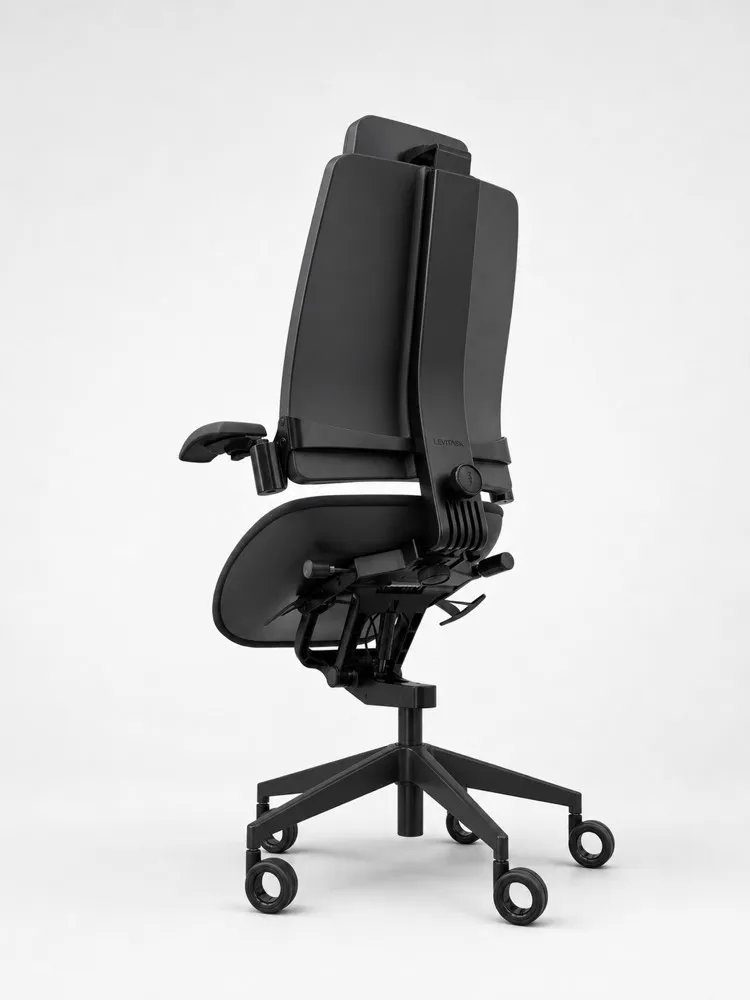
Levitask uses the term Elevated Seating for a more specific ambition: support that stays present as the person moves between working positions. The Vision Chair angles the seat up to 18 degrees forward of flat, which opens the hip angle and raises how high you sit, and its patent-pending T-Mech™ moves that seat on a knee-pivoted arc so the thighs stay in contact as you shift position. The backrest is linked to the seat and moves with it, so the open angle holds across the chair's range instead of at one setting. That is not a claim that one chair suits everyone. It is a clearer design question than "is it ergonomic?": the chair should not only fit a person when they sit still, it should make sense when they do the work that made them sit down. The word ergonomic can still be useful. It just needs to earn its meaning again.
It is also a more demanding answer, and worth saying plainly. Angling the seat raises how high you sit, so the approach assumes a desk that can rise with it. That is a real constraint, not a footnote, and it belongs in any assessment of whether the chair suits you.