
Guide
Active Sitting: The Complete Guide
Active sitting keeps muscles working while you sit. Compare kneeling, saddle, wobble, and ball chairs, the trade-off each makes, and how to make it stick.
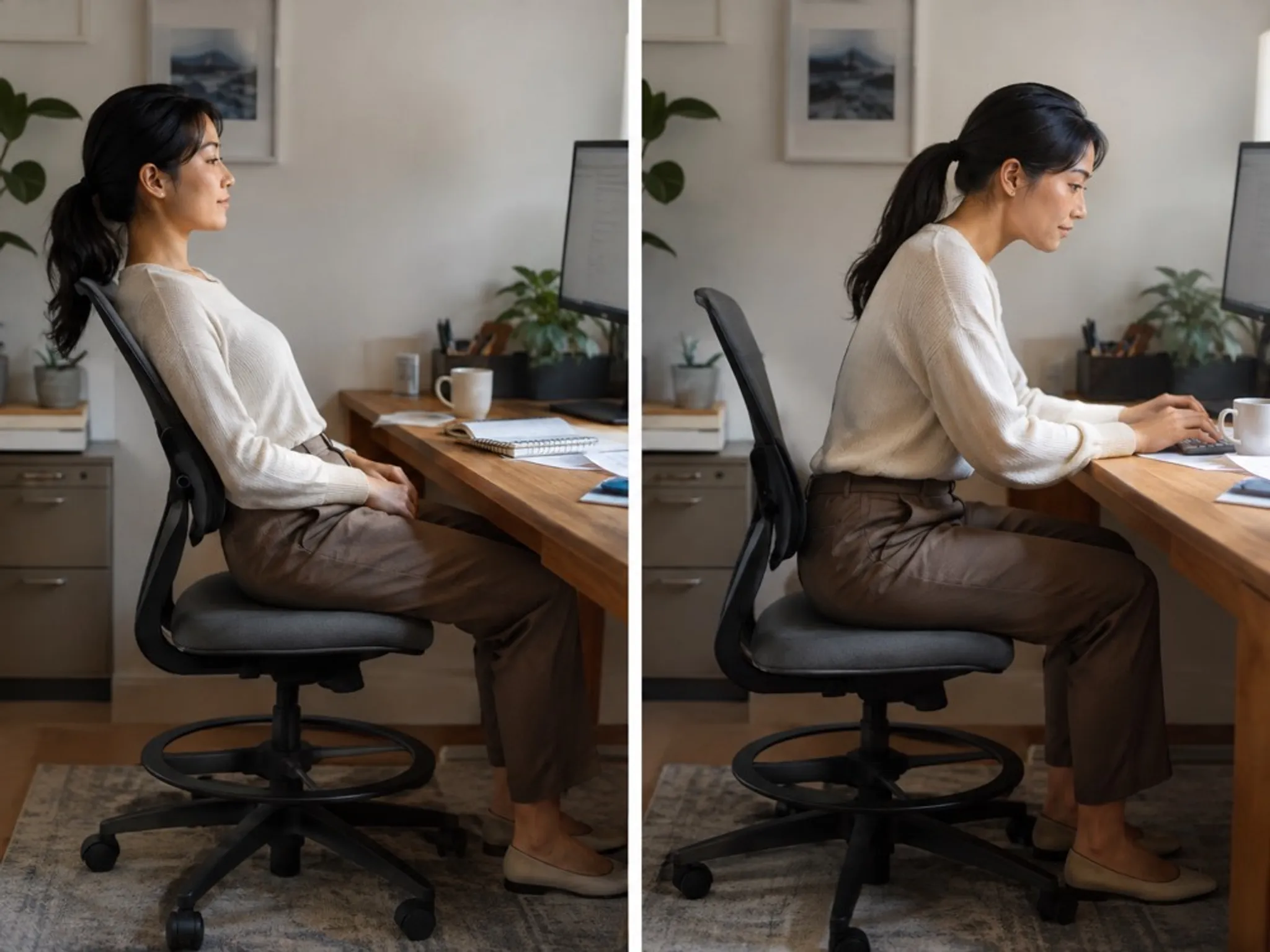
There is a line that shows up in almost every posture-chair thread online: "I find a way to slouch in any chair." That one sentence is the whole problem. You can buy the most engineered seat on the market and still collapse into it by 3pm. Active sitting is the idea that fights back: instead of a chair that holds you still, a seat that keeps you gently moving, so your muscles never fully clock out.
Below you will find what active sitting actually means, how kneeling chairs, saddle stools, wobble stools, and ball chairs each deliver it, the trade each one makes to get there, and what it takes to keep the habit alive past the first enthusiastic week.
What is active sitting?
Active sitting, sometimes called dynamic sitting, means staying gently in motion while you sit instead of locking into one frozen position for hours. Rather than a chair that holds you still, an active seat lets your body make small, constant adjustments: shifting weight, engaging the core a little, tilting the pelvis, changing the angle of your hips.
The reasoning is simple. The human body is not built to hold a single posture all day. Muscles that never move get stiff and weak, circulation slows, and the lower back takes a static load it was never designed to carry. Mandal made the deeper point in "The Seated Man" (Applied Ergonomics, 1981): sitting at 90 degrees is a product of furniture design, not anatomy, and the seated working posture belongs nearer half-standing, with a hip angle around 120-135 degrees. Ergonomists keep landing on the same practical conclusion: the best posture is the next posture. There is no single perfect way to sit. There is only sitting, then moving, then sitting again.
Chairs chase that idea in two very different ways. Some remove support so you have to work to stay upright. Others let you move freely between postures without losing support. That difference matters, and it is where most of the confusion lives.
Why does sitting still all day cause problems?
When you sit in a standard task chair with your knees at ninety degrees, your hip angle closes. Close the hip angle and the muscles at the front of your hips, the hip flexors, sit in a shortened position for hours. Over months of that, they tighten. Tight hip flexors tug on the pelvis, the lower back curve flattens or distorts, and the result is the stiffness and ache most desk workers know well. If that pattern sounds familiar, our guides on lower back pain from sitting and tight hip flexors from sitting go deeper on the mechanics.
Staying still also means static loading, and the load is bigger than it feels. Nachemson's disc-pressure measurements (Spine, 1981) found that unsupported sitting raises pressure on the lumbar discs by about 40 percent compared with standing. A muscle holding one position without a break fatigues, then hands the job to ligaments and joints that are not meant to be the main support. That is why you feel worse after a still, focused day than after a busy one. Movement is not a luxury on top of good sitting. Movement is part of good sitting.
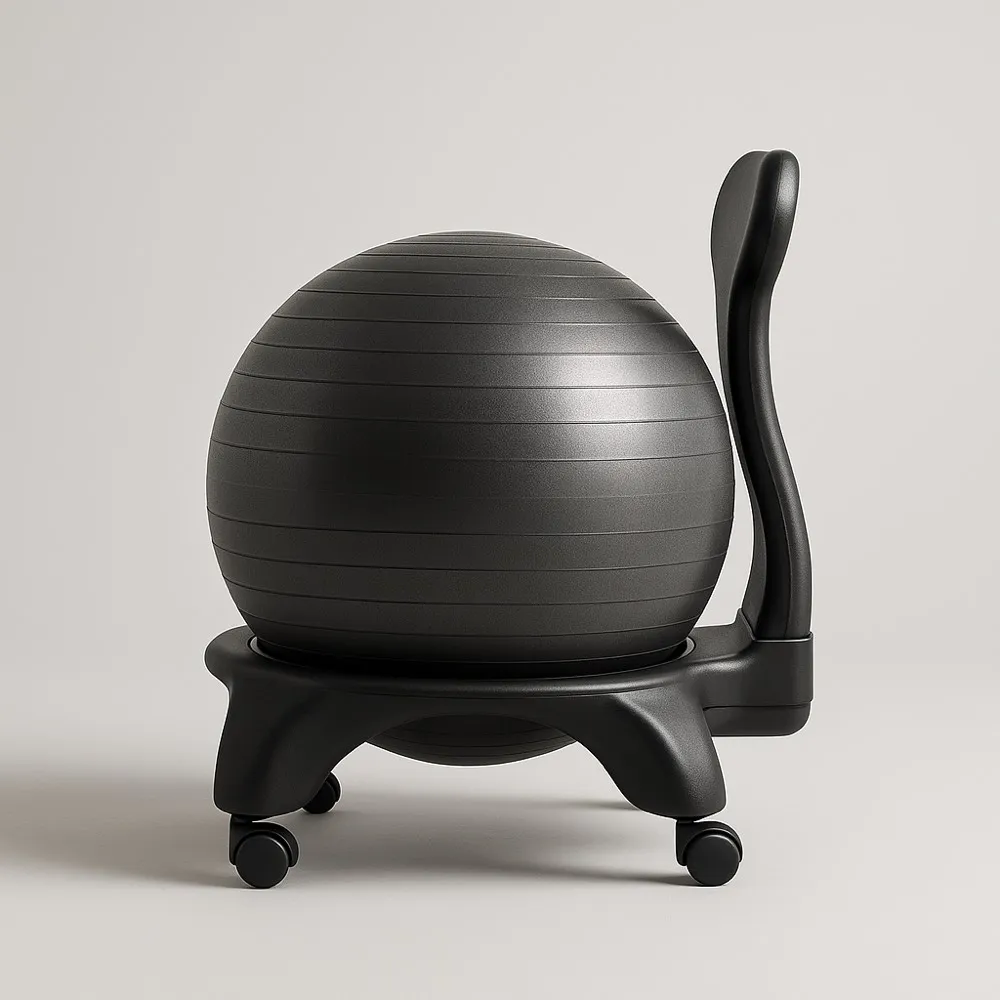
"I can slouch in any chair," so does active sitting even work?
This is the real objection, and it deserves a straight answer. Yes, you can slouch on a kneeling chair, collapse on a ball, and perch badly on a stool. No chair can force good posture onto a tired body through willpower alone. Anyone who promises that is selling you something.
Most active seating works by taking support away. A wobble stool or a ball has no backrest, so your core has to hold you up. That works while you are fresh. The moment you get absorbed in work or simply tired, you find the path of least resistance, which is usually a slump. The chair did not fail. Human attention just ran out, which it always does.
So the useful question is not "which chair makes movement impossible to avoid," because none exist. The better question is "which seat rewards good posture instead of punishing it, and keeps supporting me even when I stop concentrating." That is where the geometry of the seat matters more than the marketing.
What are the main active sitting options?
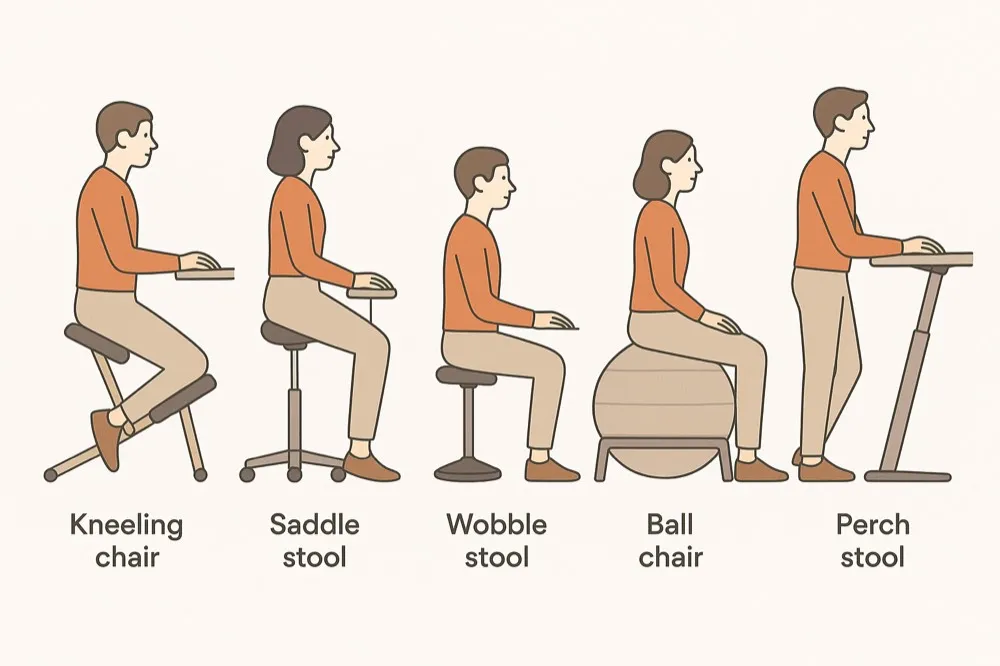
Each of these adds movement in a different way, and each has a real trade-off. None of them is wrong. They are just suited to different bodies, tasks, and days.
| Option | How it adds movement | The trade-off | Best for |
|---|---|---|---|
| Kneeling chair | Opens the hip angle, tips the pelvis forward, discourages a hard slouch | Shin and knee pressure, awkward to get in and out, no back support for long days | Short focused sessions, not full eight-hour use |
| Saddle chair or stool | Split or saddle seat drops the thighs and keeps the spine more neutral | No backrest, can cause sit-bone pressure, often needs a higher desk | Perching tasks, dentists, hygienists, sit-stand desks |
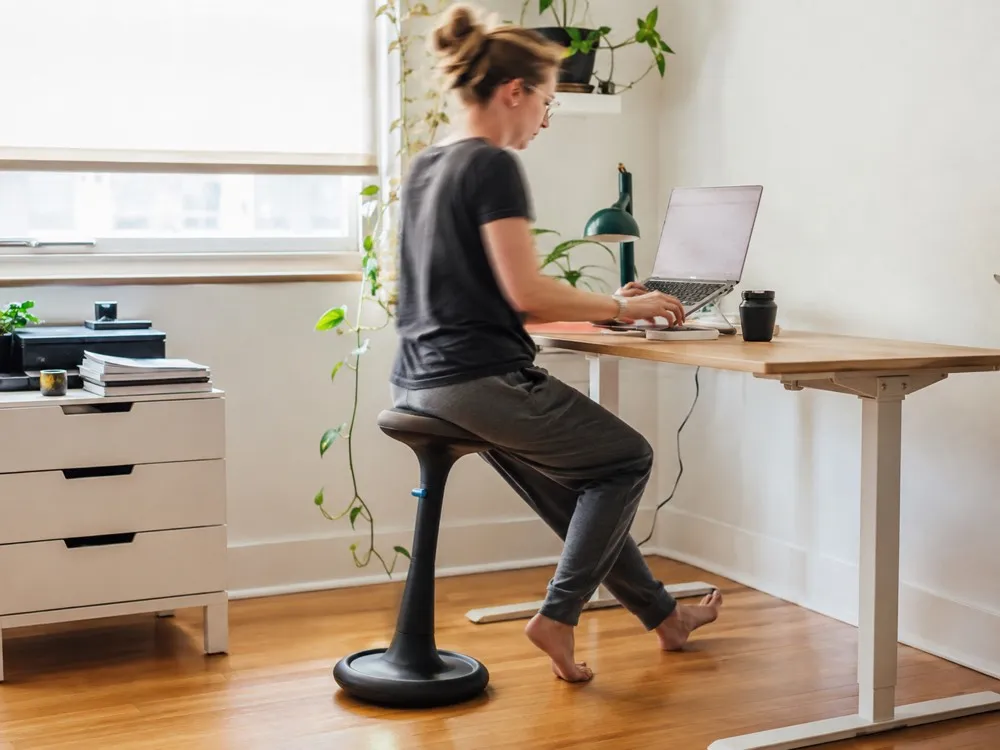
| Wobble or perch stool | Unstable base invites constant micro-adjustment | No back support, fatiguing for a whole day, easy to slouch on once tired | Pairing with a standing desk for short perches |
| Exercise ball chair | Engages the core slightly, cheap, bouncy | Unstable, deflates, tailbone discomfort, novelty fades | Occasional variety, not primary long-day seating |
| Standing-desk lean stool | Good sit-stand companion, keeps you semi-upright | Not a full-day primary chair, limited support | Alternating with standing throughout the day |
If you want to go deeper on any one of these, we cover whether kneeling chairs are good for your back, saddle chairs and posture, and pairing a stool with a standing desk in detail.
What do active chairs trade away?
Almost every option above adds movement by removing something. That is a real trade. You get more engagement and a better hip angle, but you give up the backrest, the arm support, or the ability to settle into deep focus without your core quietly giving out.
That leads to a common outcome. People buy an active seat, love it for an hour a day, and keep their old chair for everything else. The corner of many home offices ends up holding a kneeling chair, a ball, and a normal chair, each solving one slice of the day. The most common failure in posture seating is not that any single product is bad. It is that each one fixes one position and fails the moment you shift out of it.
People under about five foot four and over about six foot two get squeezed hardest, because most active seating is built for an average body and turns away the ends of the range.
How do you actually build active sitting into your day?
You do not need to buy anything to start. The core habit is variation. A few things that move the needle without special equipment:
- Change posture roughly every twenty to thirty minutes. Stand, shift, lean, or just move in the seat.
- Get up on a rhythm you will actually keep. A short walk to refill water beats a perfect plan you abandon by Tuesday.
- Set your screen at eye height so you are not craned forward, which quietly drags posture down all day. Our guide on fixing forward head posture covers this.
- Keep the hip angle open when you can. Sitting slightly reclined or perched beats a rigid ninety-degree lock.
- Pair movement with stretches that counter the sitting pattern, like the ones in our posture field guide.
The uncomfortable truth is that habits and stretches help, and then you spend eight hours in a chair that undoes them. You do your hip flexor stretch in the morning and then sit in a closed ninety-degree angle until dinner. The environment wins the day. That is not a reason to skip the stretches. It is a reason to look hard at the seat, because the seat is where most of your waking hours actually happen.
Can a seat add movement without taking support away?
The engineering problem behind every active seat is the same. Tilt a seat forward to open the hips and it pitches you toward the front edge; remove the backrest to force movement and the support leaves with it. The patent-pending T-Mech™ takes a third route. The seat angles up to 18 degrees forward of flat and travels on an arc whose fulcrum sits at your knee, so your thighs stay in contact rather than your legs bracing, and the backrest is linked to the seat so the hip angle stays open at 115 to 125 degrees across the range rather than at one setting.
The slope also does the work a wobble stool asks your core to do, without the fatigue. Perch too far forward and you slide; let the pelvis roll back and it feels wrong within seconds. The active position is simply the comfortable one. The trade is that the slope raises how high you sit, so it pairs with a desk that can rise to meet it.
This is Elevated Seating, the category Levitask created with the Vision Chair, winner of the Best of NeoCon 2026 Innovation Award. No chair replaces movement habits, and this one does not either. If the support-for-movement trade is the one you keep losing, it is worth seeing how Elevated Seating works.
Worth noting what it asks of the room. Because the seat angles forward and sits you higher, a height-adjustable desk is part of the arrangement rather than an optional pairing. Active sitting on a fixed 73cm desk runs out of road quickly.
For the wider landscape of options, see our complete guide to alternative seating.
Frequently asked questions
Is active sitting actually better than a regular office chair?
For most people, variety beats either extreme. A day spent entirely on an unsupported active stool can leave you as sore as a day frozen in a rigid chair. What helps is movement plus support: a seat that lets you change posture without giving up the backing your spine and thighs need. The goal is not to sit hard, it is to stop sitting still.
Can active sitting fix my posture?
No single chair or habit fixes posture by itself, and it is fair to be skeptical of anything that claims to. Active sitting supports better posture by keeping you moving and keeping the hip angle open, which many people find genuinely helpful over time. Real change comes from the combination of movement, targeted stretches, screen setup, and a seat that does not fight you.
How long can I sit on a ball chair or wobble stool each day?
Most people do best treating these as part of the day, not the whole day. An hour or two of unsupported active sitting engages the core and breaks up static loading, but a full eight hours usually leads to fatigue and, ironically, more slouching once you tire. Rotating between an active seat, standing, and a supportive chair tends to feel best.
When should I see a professional instead of buying a chair?
If you have severe pain, pain that travels down your leg, numbness, weakness, pain that wakes you at night, or discomfort lasting more than a few weeks, see a qualified clinician before changing your setup. A chair supports comfort and better habits. It is not a treatment, and persistent or worsening symptoms deserve a real assessment.