
Profile
Klaus Kummer and Forty Years of Asking More of a Chair
The Vision Chair began with an engineer who spent forty years on seating mechanisms and refused the usual trade-off. Here is how Klaus Kummer's question, not a trend board, produced the patent-pending T-Mech.
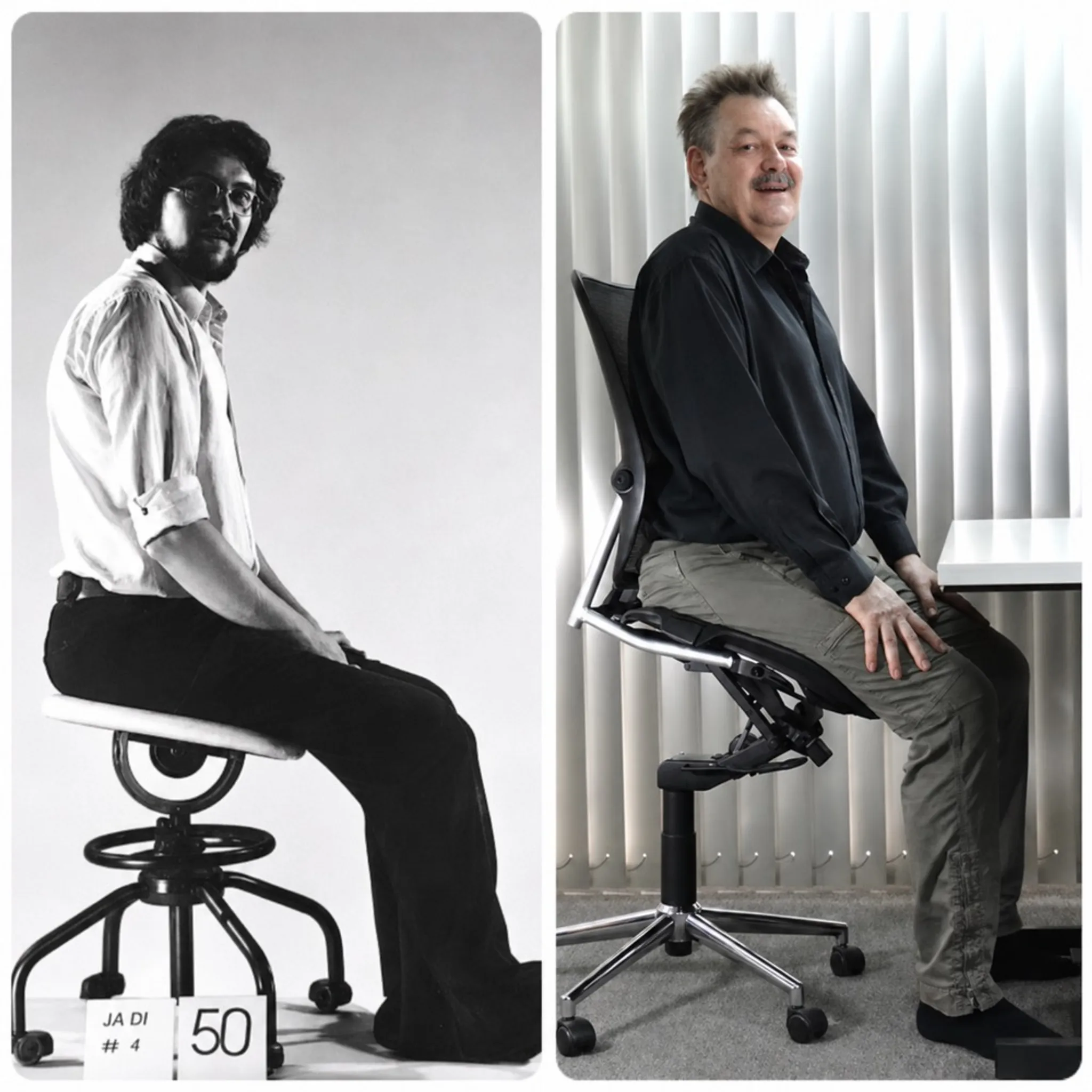
Most people see a chair as a finished object. Klaus Kummer sees a sequence of mechanical decisions. That perspective comes from four decades spent working with seating mechanisms, and it explains why the Vision Chair did not begin with upholstery, a trend board, or a list of feature requests. It began with a problem that conventional office chairs had learned to work around: how can a chair stay supportive when its user is not sitting still?
Copenhagen, and a different set of assumptions
The starting point was Scandinavian design, studied in Copenhagen in the 1980s. That matters more than it might sound, because the Scandinavian tradition does not treat comfort and structure as separate problems to be solved by separate parts. A chair is not a frame with padding added afterwards. The form is meant to do the work, and if something has to be strapped on to make the object bearable, the form was wrong.
Carry that assumption into office seating and the standard solution starts to look odd. The industry's answer to the seated slouch is a lumbar pad: a component added to counteract a posture the seat itself created. It works, in the sense that it holds the curve. But it treats the symptom of a geometry that was never questioned.
The question that follows is the obvious one, and also the hard one. If the seat is what closes the hip angle and rolls the pelvis back, could the seat be what opens it instead?
Forty years of not letting it go
That question is easy to ask once and much harder to keep asking for four decades.
Kummer spent those years inside the mechanism side of the industry, which is where the constraints are real: linkages, load paths, travel, cost, the tolerances of parts made in volume. The open-angle idea kept coming back, and kept running into the same wall. Tilt a seat forward and the occupant slides. Solve the slide and you lose the angle. Every prototype had to answer that, and for a long time the answers were not good enough.
The industry's verdict was not hostile so much as practical. There was no demand for it. Office seating was a mature category with an established shape, buyers specified against familiar criteria, and a mechanism that required a different desk height was a harder sell than another set of adjustments on a conventional chair. The market was not ready, and that is a reasonable thing for a business to conclude.
It is a less reasonable thing for the person who thinks the geometry is wrong to accept. He kept building.
The problem was never a shortage of chairs
There are many excellent office chairs, and many specialised alternatives: kneeling chairs, saddle stools, perches, recliners, task chairs with ever more adjustment. Their existence is the evidence. The workday has never been solved by one fixed sitting position, or the market would have stopped inventing new ways to sit.
Each type takes a position on what matters most. Some prioritise a forward, active posture. Some prioritise relaxed support. Some make it easy to move between sitting and standing. The hard part is combining those priorities without building a seat that loses the user when they lean forward, or one that makes them brace to stay in place. Kummer's question was not how to add another adjustment. It was how to change the path the seat itself takes.
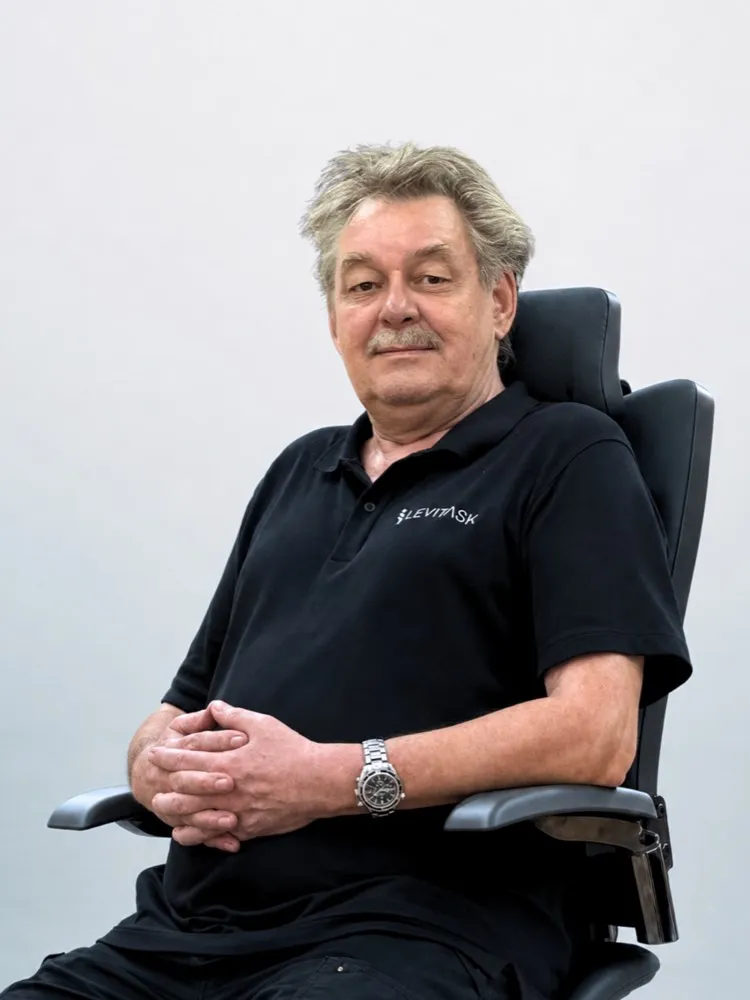
An engineering problem hidden in plain sight
Opening a seat angle is straightforward until the user moves. A forward tilt puts the body in a more open position, but it can also create a sliding force toward the front edge. Solve that with a flatter seat and the open angle shrinks. Solve it with a more aggressive shape and the chair turns restrictive. This is the kind of compromise that makes furniture feel ordinary; the trade-off becomes so familiar it stops being questioned.
The industry, by and large, accepted it. An open-angle chair that held its angle through movement was treated as not worth the mechanical trouble. Kummer built it anyway. The T-Mech™ was developed around a different geometry: in the Vision Chair, the seat travels on an arc whose pivot sits at the knee, so the thighs stay in contact as the person reclines or leans in. The open angle is not a setting the user has to find and then protect. It is part of how the chair moves. The mechanism itself is the subject of A Seat Is a Moving Surface.
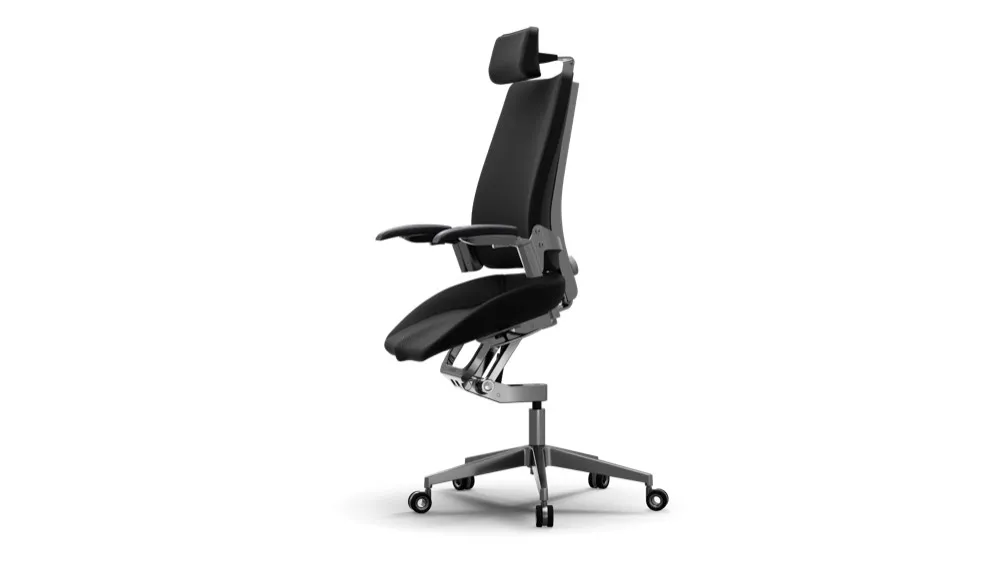
Linking the backrest to the seat is the other half of the idea. Because the two move together, the angle between torso and thighs holds open through the whole range, so what changes as you move is your height and orientation rather than how closed your hips are.
The seat angle that makes this work, up to 18 degrees forward of flat, is also what raises how high you sit. That is the constraint the industry balked at: a chair that needs the desk to rise with it. It is a real cost, and it is the price of solving the geometry at the seat rather than patching it with a lumbar pad.
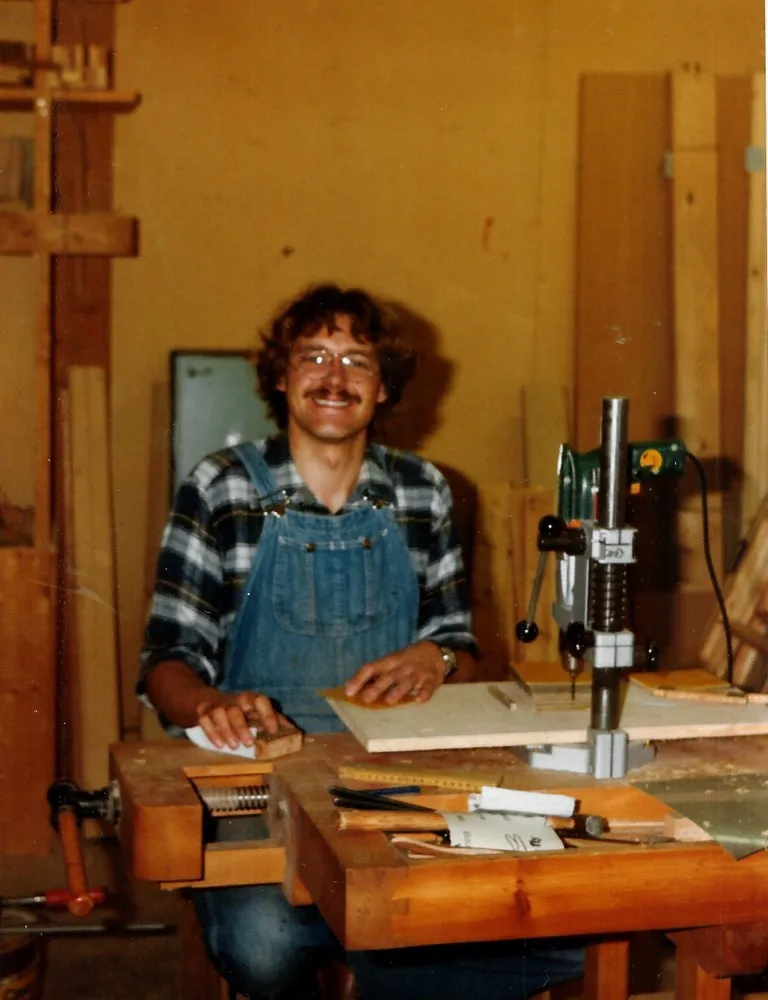
A mechanism is only useful when a person forgets it is there
Engineering is often most successful when it becomes invisible. Nobody wants to spend the day thinking about a linkage. They want to read, write, meet, and decide without constantly resetting their chair. That is why the mechanism matters less as a feature than as an experience: the person using it should notice the absence of a familiar compromise, less need to choose between an open working posture and staying in contact with the seat.
The Vision Chair is Levitask's answer to that problem, and the patent-pending T-Mech is as much a statement of intent as a piece of engineering. The chair should adapt to a person moving through a day, rather than asking the person to adapt to the chair.
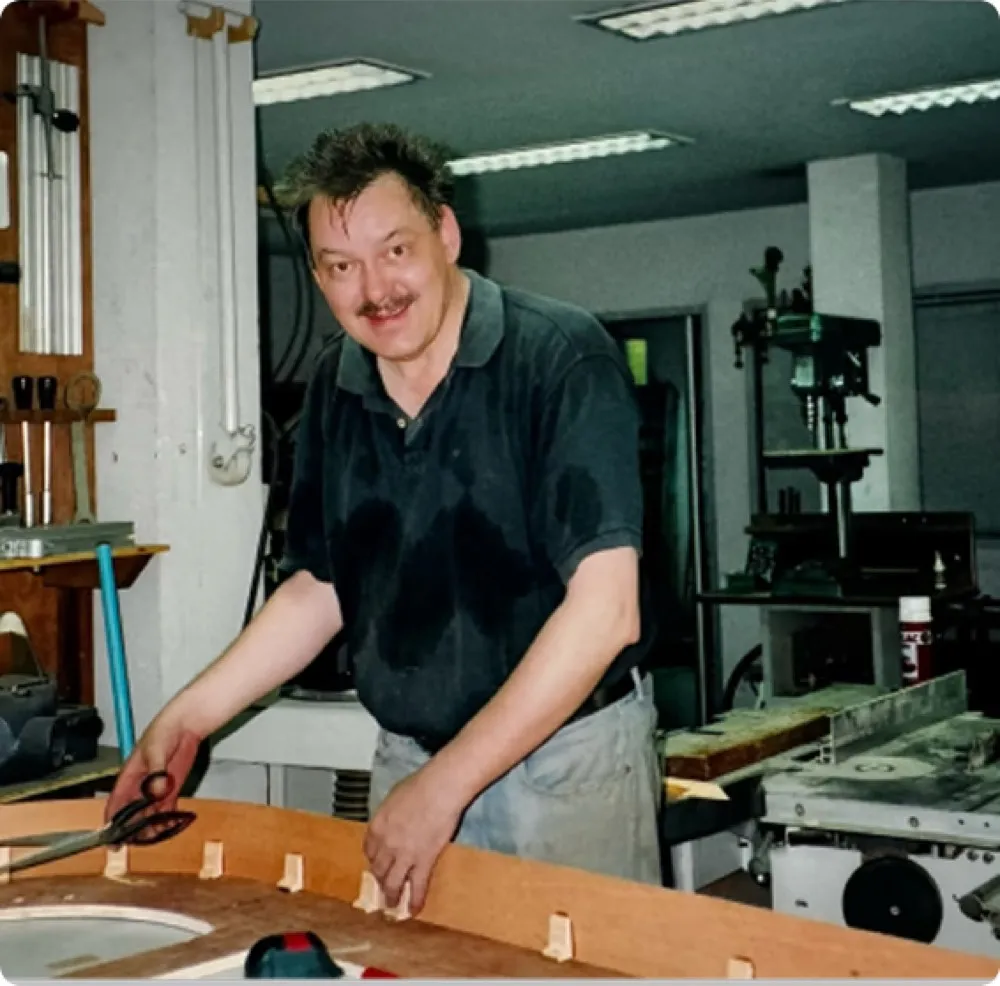
A longer view of innovation
Forty years of experience matters because seating is full of short-lived novelty. A new mechanism is not valuable because it looks unfamiliar. It is valuable when it resolves a real trade-off without creating a different one in its place. The work has drawn its share of outside signals: a Best of NeoCon 2026 Innovation Award, and a Kickstarter campaign backed by 612 people that raised over $561,000, in the top fraction of a percent of campaigns on the platform. The T-Mech itself is covered by patents granted and pending in the United States, China, and the European Union.
Those are useful markers, not the final test. The real test happens in use, across long and varied workdays, with people who change position more often than they realise. The most interesting thing about a better chair may not be that it tells people how to sit. It may be that it gives them less reason to think about the chair at all. That is the idea behind the category Levitask calls Elevated Seating.