
Posture Science
A Seat Is a Moving Surface: Inside the T-Mech
The seat pan decides where the thighs are supported and what happens when you lean in. Here is why a forward-sloping, moving seat holds an open posture where a flat one lets the body slide, and how the patent-pending T-Mech is built around it.
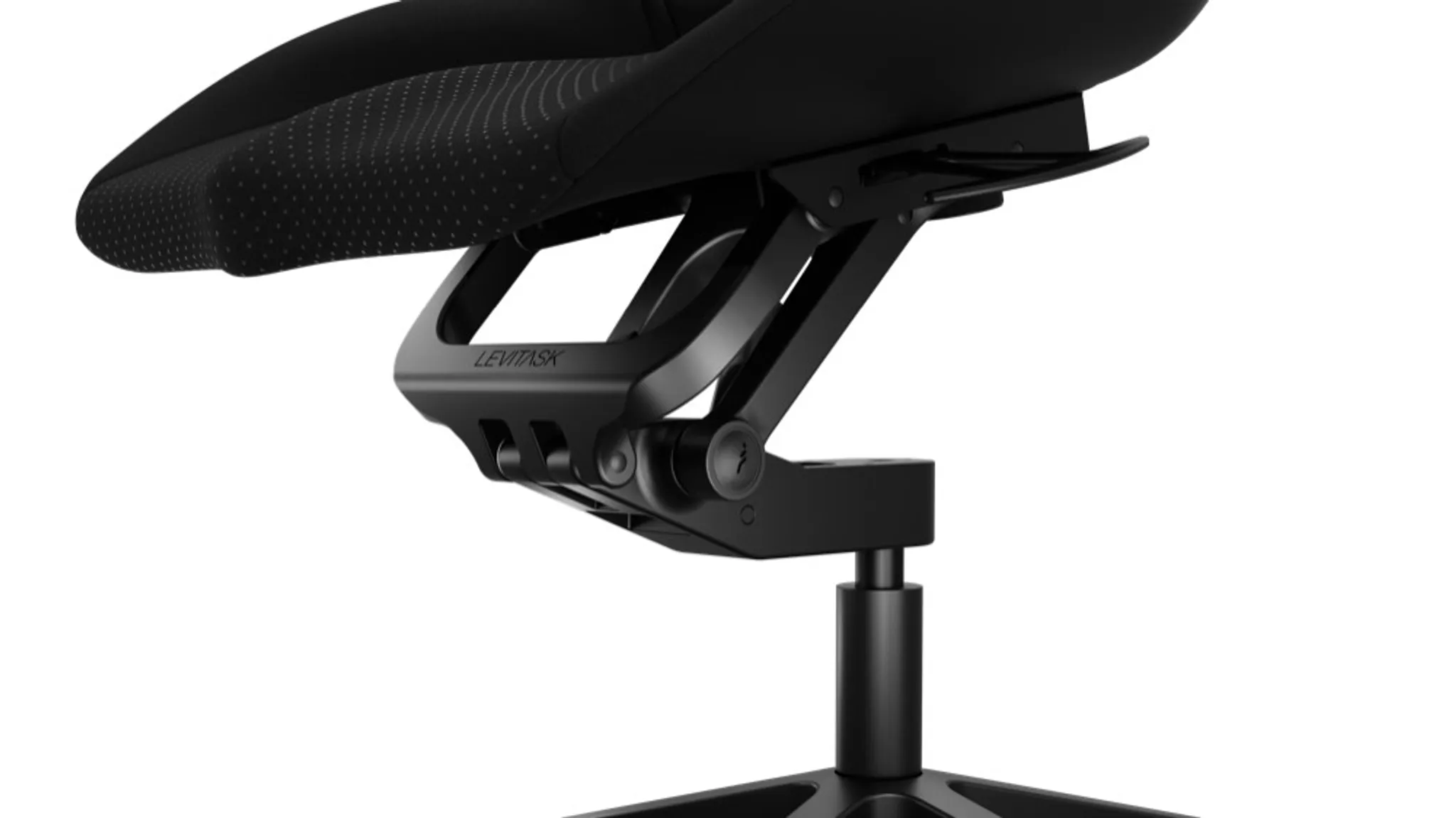
The seat pan is easy to overlook. It disappears under the person using it, so it tends to be discussed only in terms of foam, fabric, or depth. Yet it decides more than comfort. It decides where the thighs are supported, how the pelvis sits, what happens when someone leans in, and whether the chair is still useful once the task changes.
A seat, in other words, is not a surface you rest on. It is a surface that either travels with you or gets left behind.
What the angle of the seat does
The tilt of the seat is not a detail. It is one of the oldest variables in the seating literature. Bridger's controlled study of forward-sloping seats (South African Journal of Physiotherapy, 1985) was among the first to measure it directly: seats sloping ten to fifteen degrees forward preserved the natural curve of the lower back, where flat or rearward-sloping seats let that curve flatten out. A forward slope opens the relationship between the trunk and thighs, which is the whole point of an active working posture.
The catch is what a forward slope does next. Tilt a fixed seat forward and it can invite the body to slide toward the front edge. The person then braces with their legs or shuffles back, and the open angle they gained is spent on staying in place. This is the compromise buried inside most alternative-seating ideas. The desired position is easy to picture. The hard part is holding it once the body starts to move.
The problem with a flat path
In a conventional chair, the user and the seat do not always travel together. Lean forward and the body moves toward the front edge while the seat stays roughly where it was. Recline and the relationship between backrest, pelvis, and thighs changes again. There are ways to open the angle, and a forward-tilting seat is the most common, but tilt a plain seat far enough and you reintroduce the sliding problem you were trying to solve.
The challenge is not simply to open a seat. It is to give the seat a movement path that stays useful as the person moves.
The arc is the idea
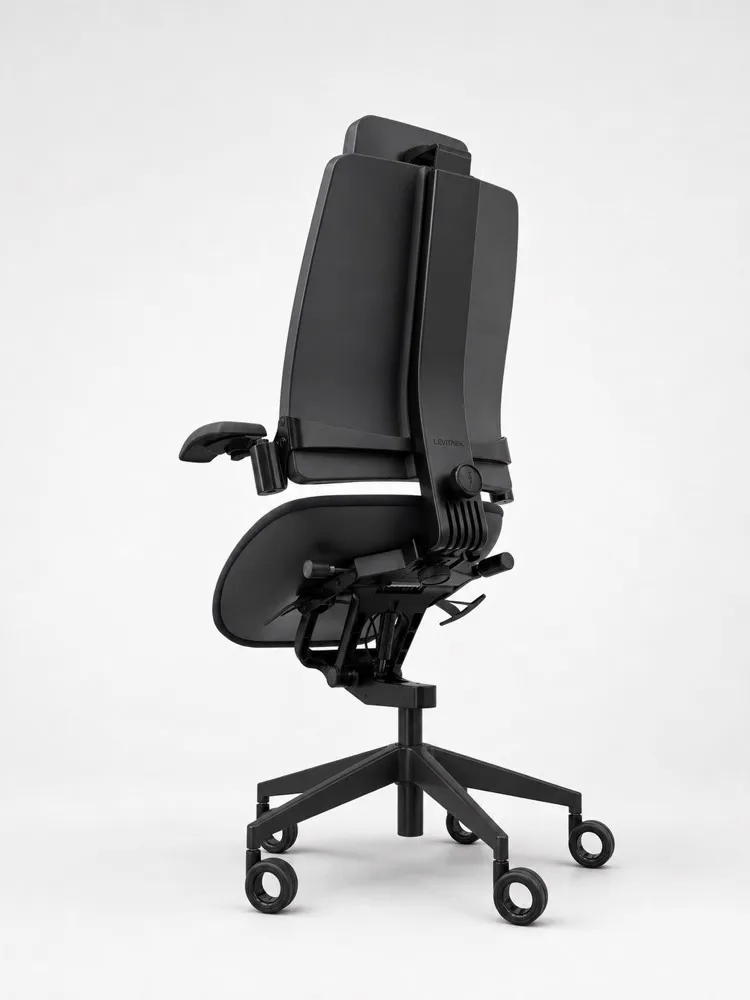
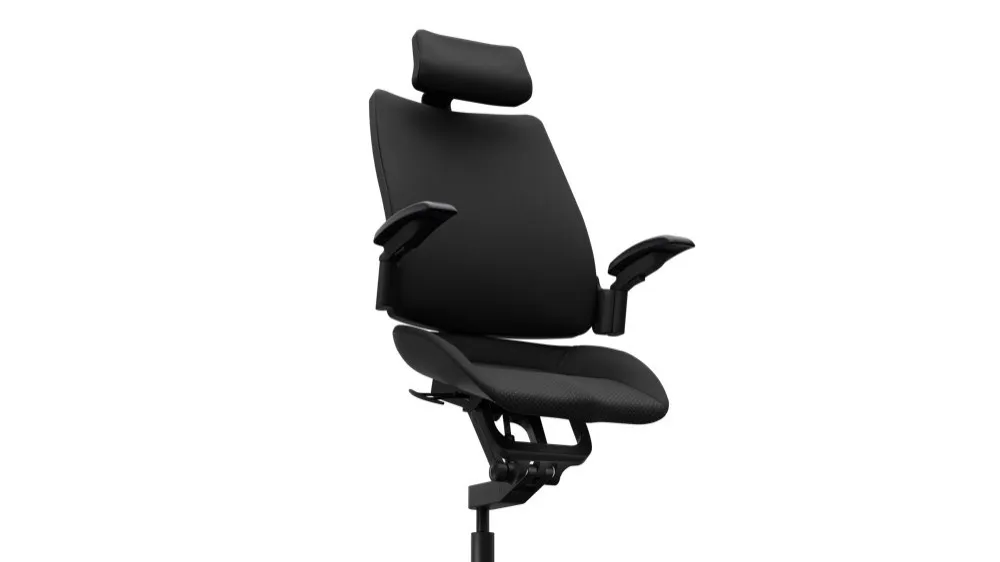
The Vision Chair's patent-pending T-Mech™ answers this with geometry rather than a steeper cushion. The seat angles up to 18 degrees forward of flat and follows an arcing path with its pivot at the knee, so as the user reclines or leans in, the surface moves to stay beneath the thighs instead of leaving the body to find support at the seat's edge. The backrest is linked to that seat and travels with it, so the open hip angle of roughly 115 to 125 degrees is held by the chair rather than by the person sitting in it. The seat surface does its share too: a fine anti-slip matrix, small rubber dots across the pan, adds the grip that keeps an angled seat from producing the slow creeping slide that plagues plain forward tilts.
The other thing the arc does is lift you. A seat angled forward sits you higher than the same seat flat, which is where the category, Elevated Seating, gets its name and why it is built to pair with a desk that can rise to match.
That movement is what separates the mechanism from a conventional forward tilt. The chair is not only changing the seat angle. It is changing the relationship between the seat and the person as they move: leaning toward a document, sitting taller during a call, shifting back to think, then returning to the desk, without having to find a new supported position at every stage.
Why thigh contact matters
Thigh contact is not a detail that belongs only in an engineering drawing. It decides whether a chair feels present when the person is working forward.
When a seat loses contact with the thighs, the user feels perched at its edge. Some people respond by bracing through their legs. Others pull themselves backward, even when that is not the position the task calls for. Either way the chair becomes something to manage rather than something that supports the work. Keeping that contact through movement is a mechanical solution to a practical feeling: the seat should remain under you when you need to lean into your work.
This is why the forward position is treated as normal here, not as an exception. People lean in to read closely, write, sketch, and concentrate. A seat built only for a relaxed upright pose turns each of those moments into a small departure from what the chair was made for.
The mechanism should be felt, not studied
Nobody wants to learn the language of linkages before choosing a chair. A mechanism succeeds only when its effect is legible without a diagram. You should feel that you can lean forward without being pushed off the seat, and that changing position does not open a negotiation with a set of controls.
The diagram still earns its place. It shows the feeling is not luck. It comes from a specific decision about the path the seat takes, which is also the idea behind the phrase the angle never closes.
A mechanism is not a miracle
The T-Mech does not make a chair right for every person, desk, or task. Fit, desk height, screen position, and the rest of the workstation still matter, and no chair replaces movement or makes claims about treating medical conditions.
What the mechanism does is focus the design on a trade-off that office seating has long accepted: whether a chair can offer a more open working position without making the user choose between that position and continuous support. That is a narrower claim than solving posture, and a more defensible one. The surface you sit on should not become less supportive the moment you begin to work differently.
This is the engineering half of a larger idea. For the category it belongs to, see what Elevated Seating means; for the engineer who spent forty years on the problem, see Klaus Kummer's story.