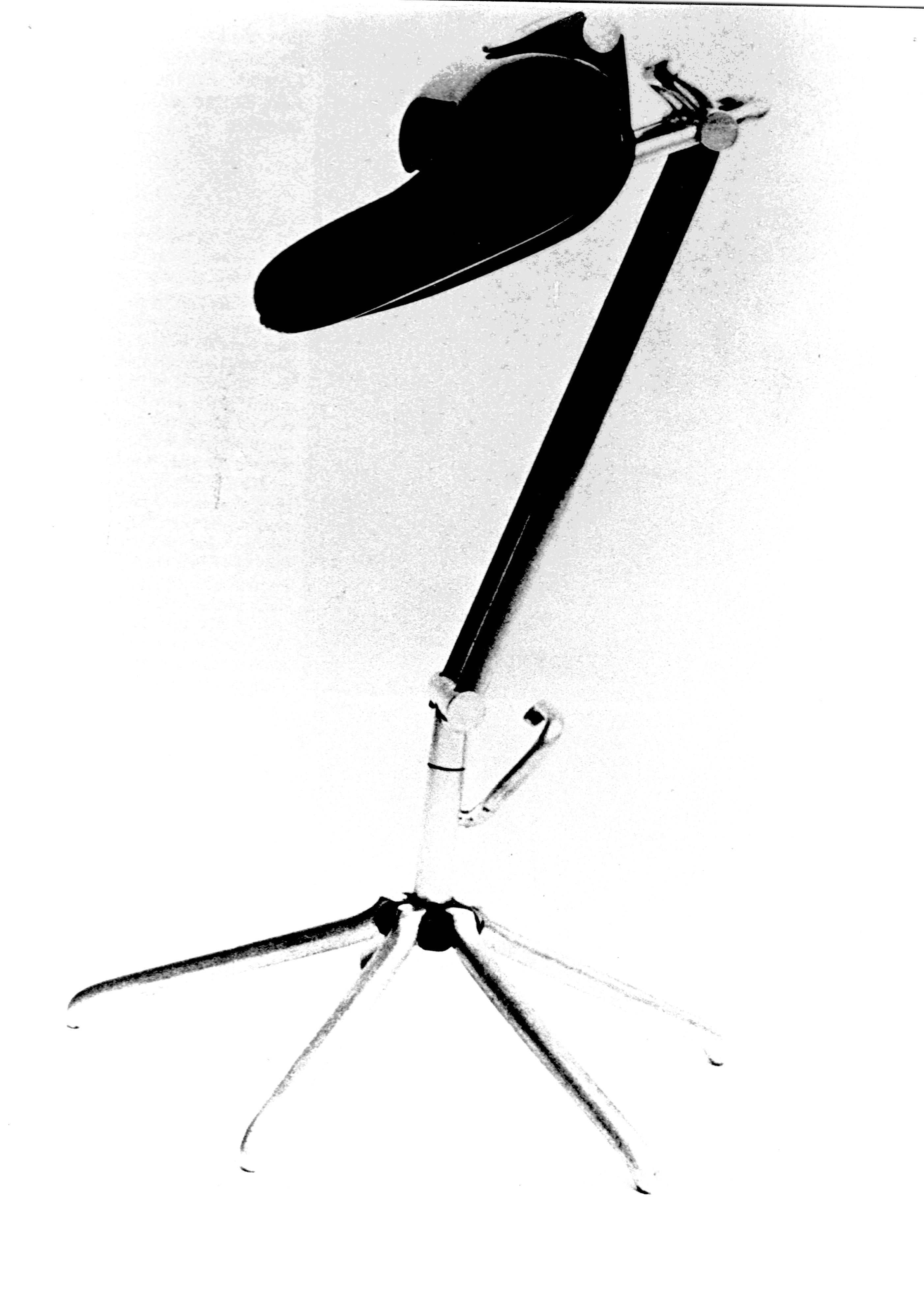
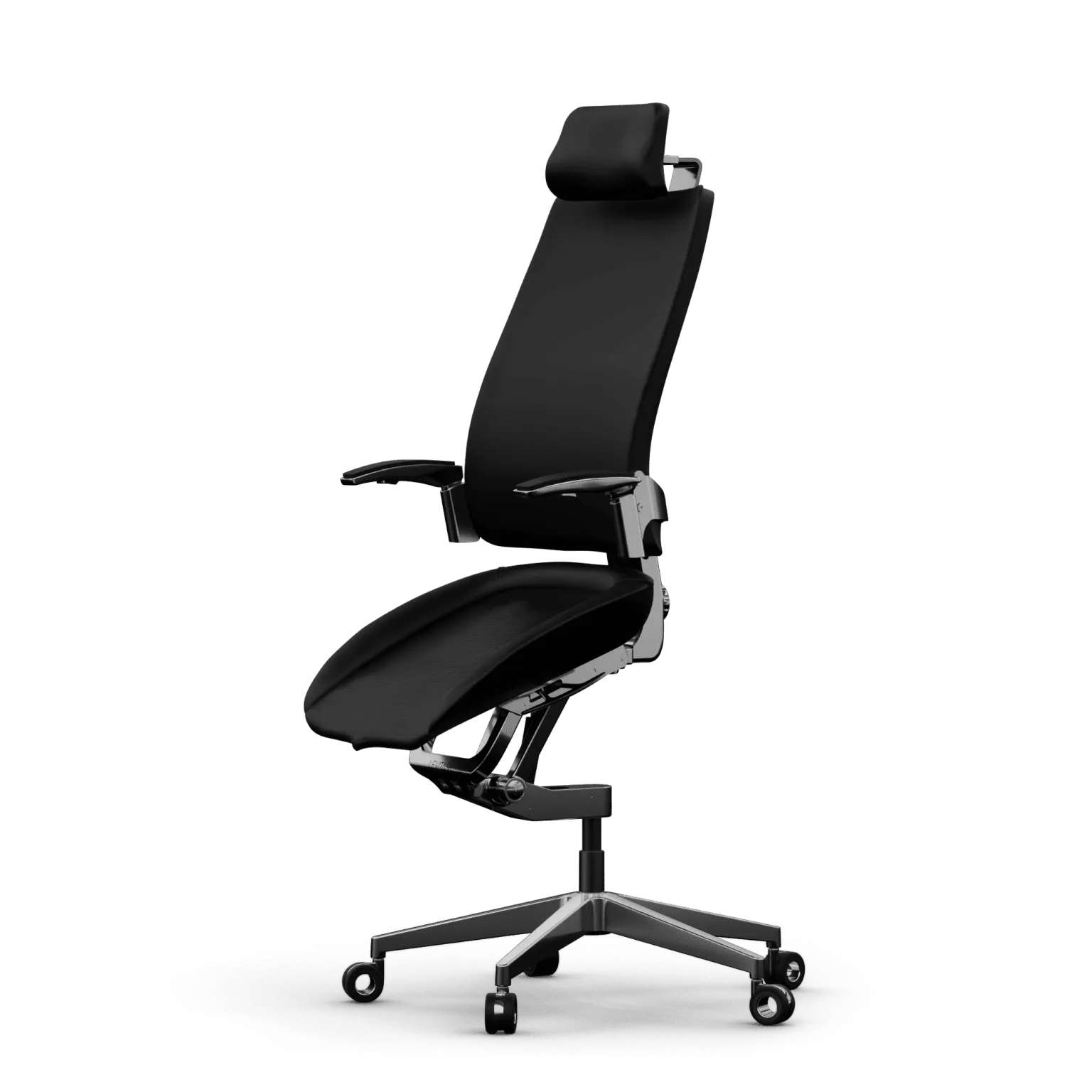
40

40

40

Years in the Making

Undeterred by his father's hopes for him to become an architect, Klaus chose an
apprenticeship as a cabinetmaker. As his
journey continued, he pursued and completed an education in engineering and construction in Germany, setting the stage for what would one day become his lifelong dream.
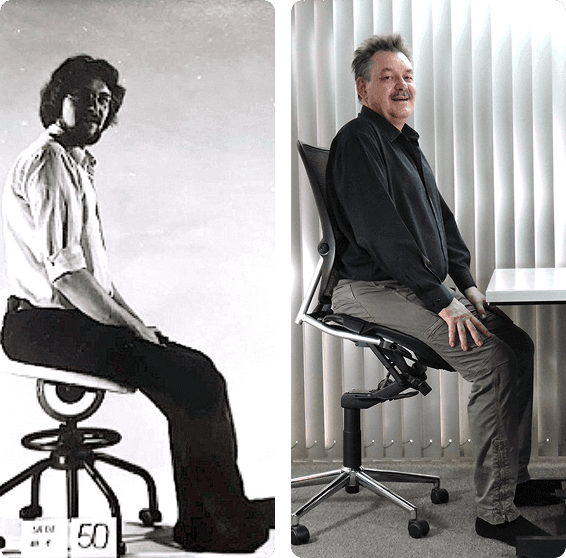
He then pursued and completed education in engineering and construction in Germany.

Left side shows a man sitting upright in a reclined chair and the other shows the same man 40 years later sitting in one of the first prototypes of the Vision Chair

The Early Years

T

T

T

he story of Levitask begins with its founder Klaus Kummer, who, as a young boy, began to discover his passion while immersed in the workshop of his grandfather - a master joiner at the state railways in West Germany.
It was there that he cultivated his love for woodworking and craftsmanship.
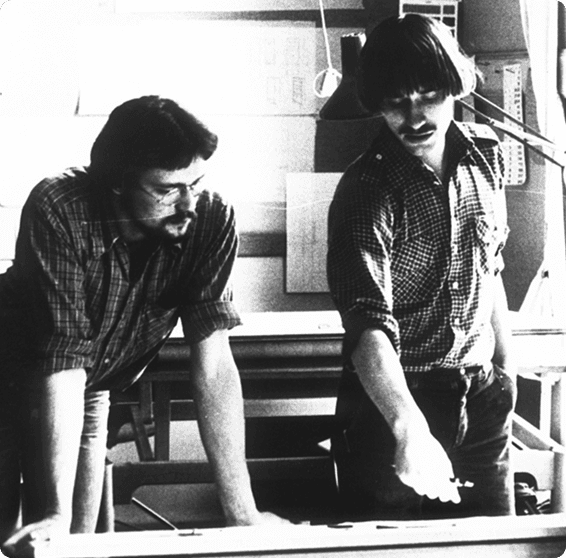
Black and white photograph of two individuals looking closely at a design schematic or document on a table.

1997

1997

1997

The Early Beginnings

Having completed his education in Germany, Klaus ventured to study Scandinavian Design at the Copenhagen School of Applied Arts and Crafts where he learned about the principles of Scandinavian Design and ergonomics.

How It Started

During his studies, he met Dr. Mandal, who had dedicated years to researching seating and posture issues among school children and students. Dr. Mandal was one of the pioneers in addressing the problems associated with conventional seating. He developed the first theories for an elevated seating concept and conducted extensive studies on the subject in the 1970s.
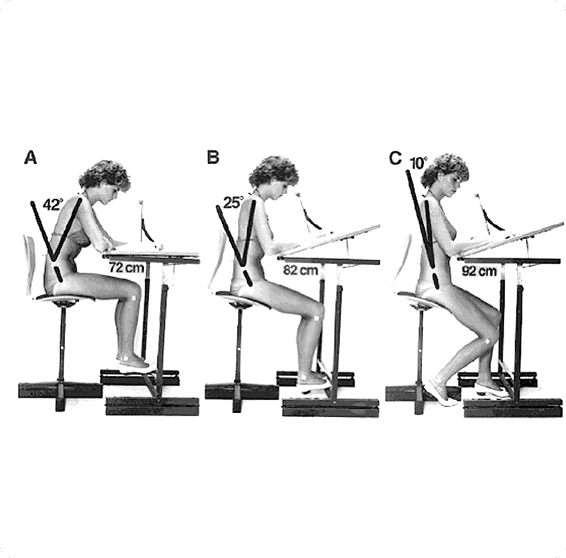

A sequence of four black and white line drawings illustrating a user interacting with an adjustable office chair.

“How did such an adverse form of sitting come to be regarded as correct and advised to this day?”

– Dr. A.C. Mandal
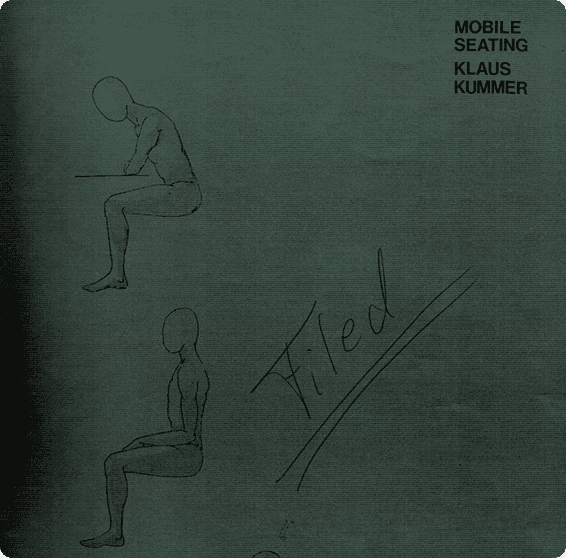
Close-up texture photograph featuring a weathered, dark greenish-grey surface with subtle texturing.

1981

1981

1981

Finishing Project on Mobile Seating

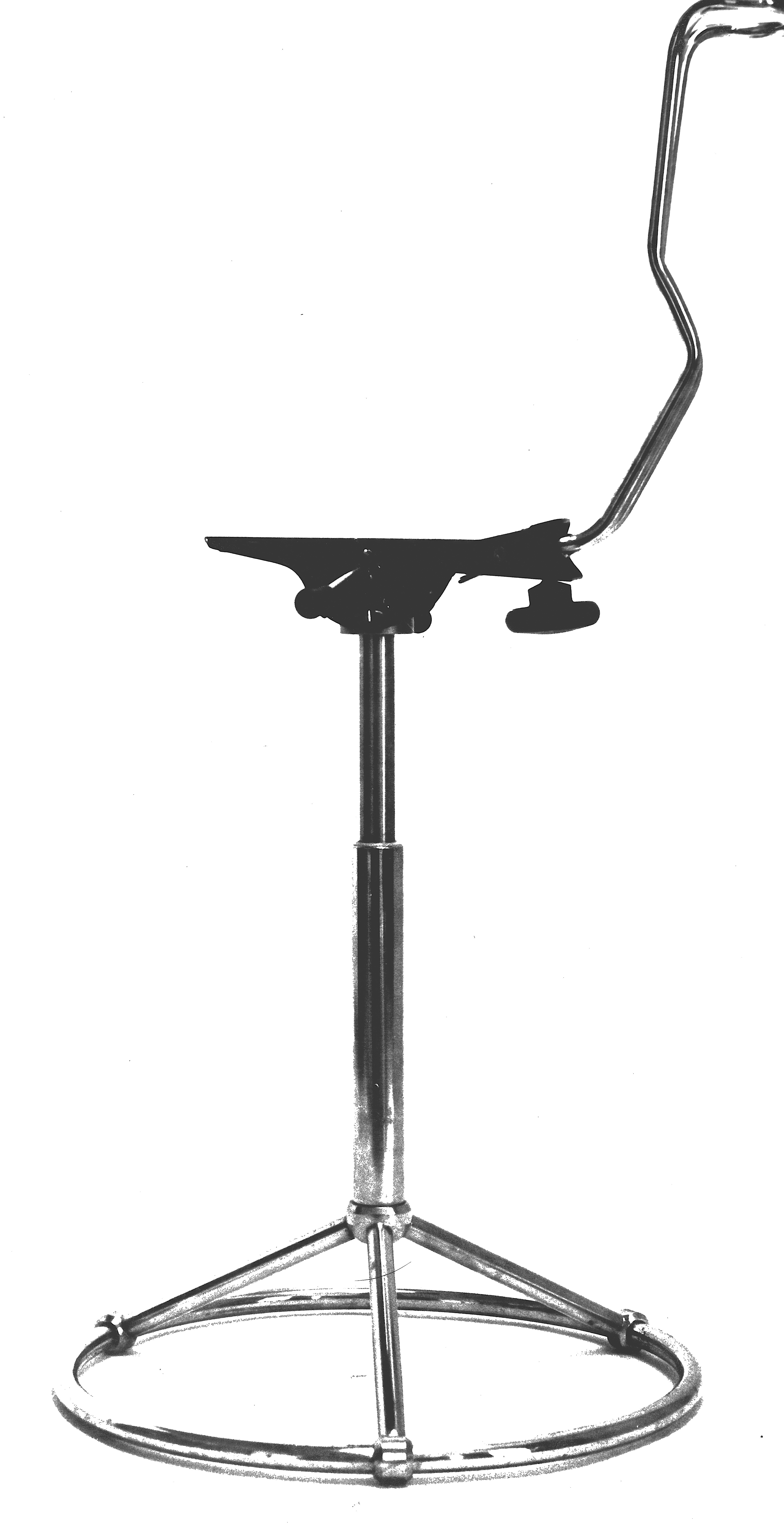
Klaus decides to devote his final project to the study of seating, which led to the creation of the first prototype.

1982

1982

1982

The Journey Begins

After graduating, Klaus began to explore various design inspirations, including the horse saddle.

He admired its natural curvature and support. This inspiration birthed ideas for the elevated seating concept, with each iteration refining his vision for the ideal chair.
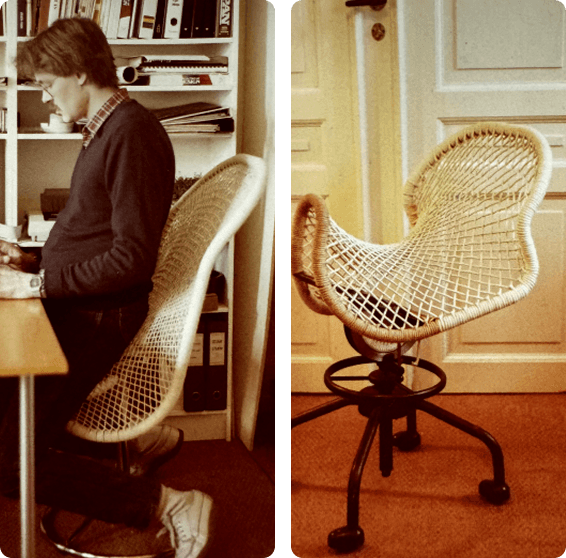
Two side-by-side black and white photographs showing chair development. The left panel is a candid photo of a man in a suit adjusting a mechanical component of a chair. The right panel shows a mechanical prototype frame for an office chair.

Start of a Career

1988

1988

1988

Klaus’ expertise and growing reputation in the field caught the attention of a Swiss company Diethelm Industries Co., Ltd where he was offered a position of a regional technical director for South East Asia.
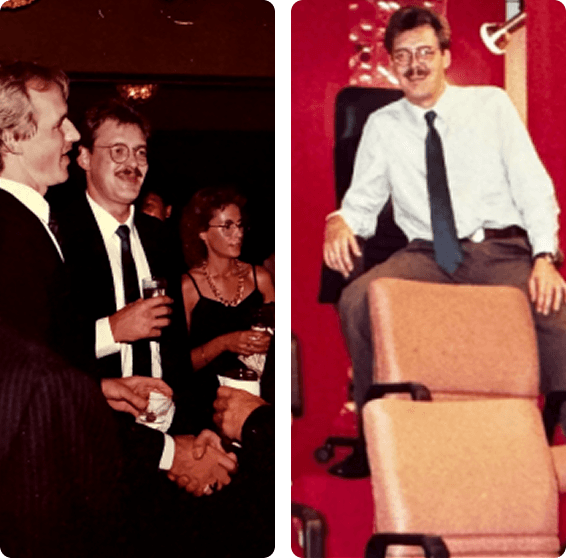
Two side-by-side photographs. The left panel shows a group of people dressed formally at an evening reception. The right panel shows a man in a light-colored dress shirt working with large cardboard boxes in an office setting.
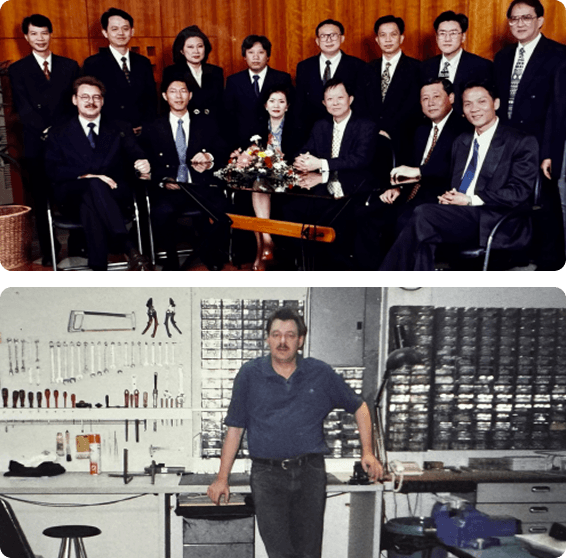
Two vertically stacked photographs. The top panel is a formal group portrait of multiple business executives posing together in suits. The bottom panel shows a workspace with a designer standing at a desk filled with technical drawings and tools.

1992

1992

1992

Klaus continues his career as a head of design and engineering at Acmen Int.

2000

2000

2000

After 13 years of corporate life, Klaus felt ready and had enough experience to continue his life-long dream of improving the way we sit.
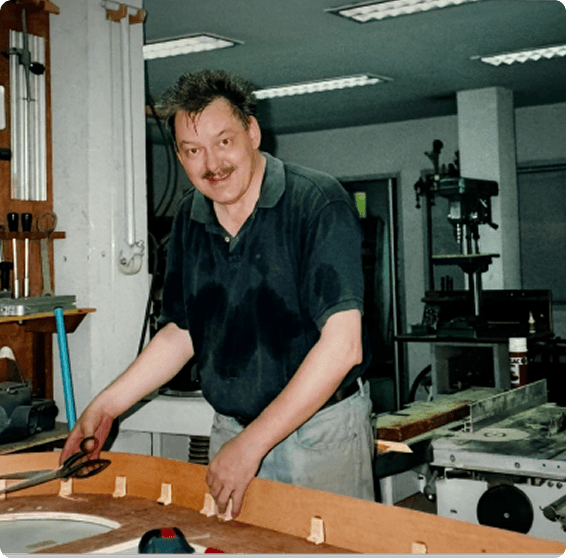
A man smiling at his work bench in a workshop environment with tools and machinery visible in the background.

Return To The Beginnings

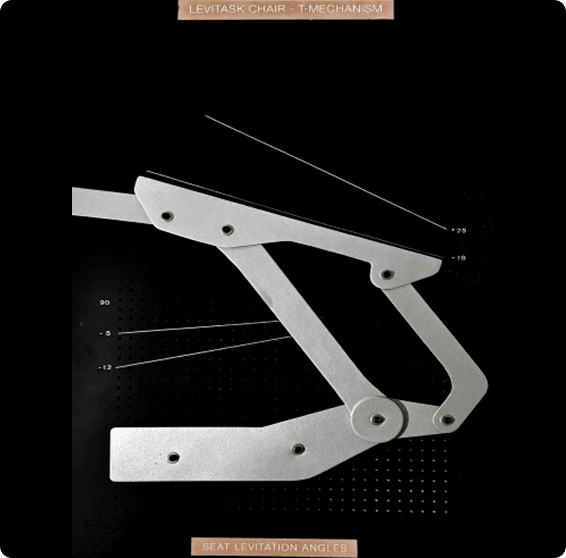
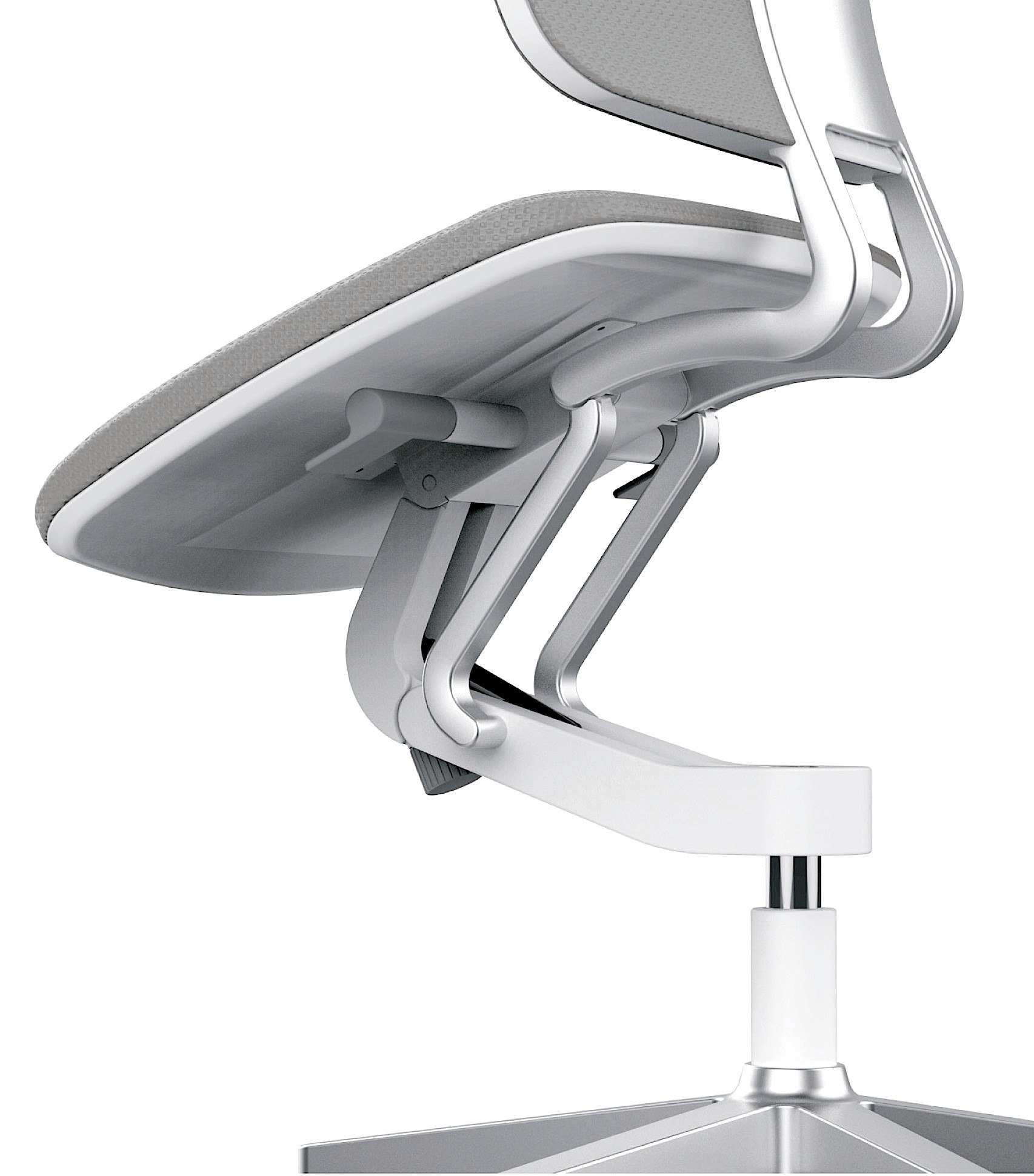
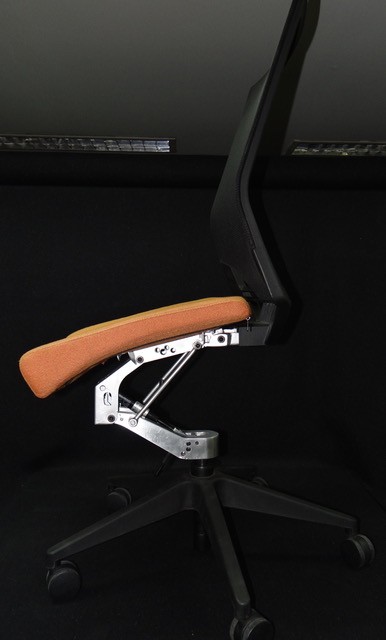
Close-up product photograph of the patented T-Mech Mechanism.

2013

2013

2013

First Patent

Klaus conceived and patented the initial concept of elevated seating, but it had limitations requiring extensive development.

2018

2018

2018

First Presentation

After years of extensive research, a second patent was filed on March 13, 2018, marking significant advancements in the refinement of the “LEVI-TECH” concept.

When Klaus presented the Elevated Seating concept to major global office furniture companies, he faced rejection. Industry leaders claimed that the market wasn’t ready and suggested he revisit the idea in five or ten years. The concept’s requirement to elevate desk height posed a challenge to existing revenue-generating seating products, potentially rendering substantial R&D investments obsolete.

Despite these setbacks, Klaus persisted in refining the concept.
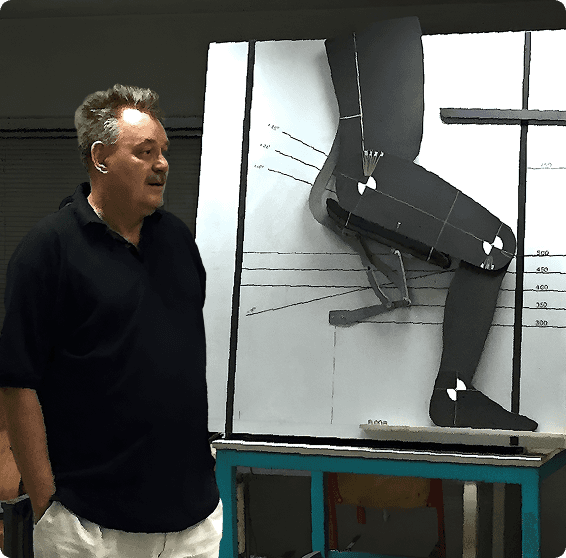
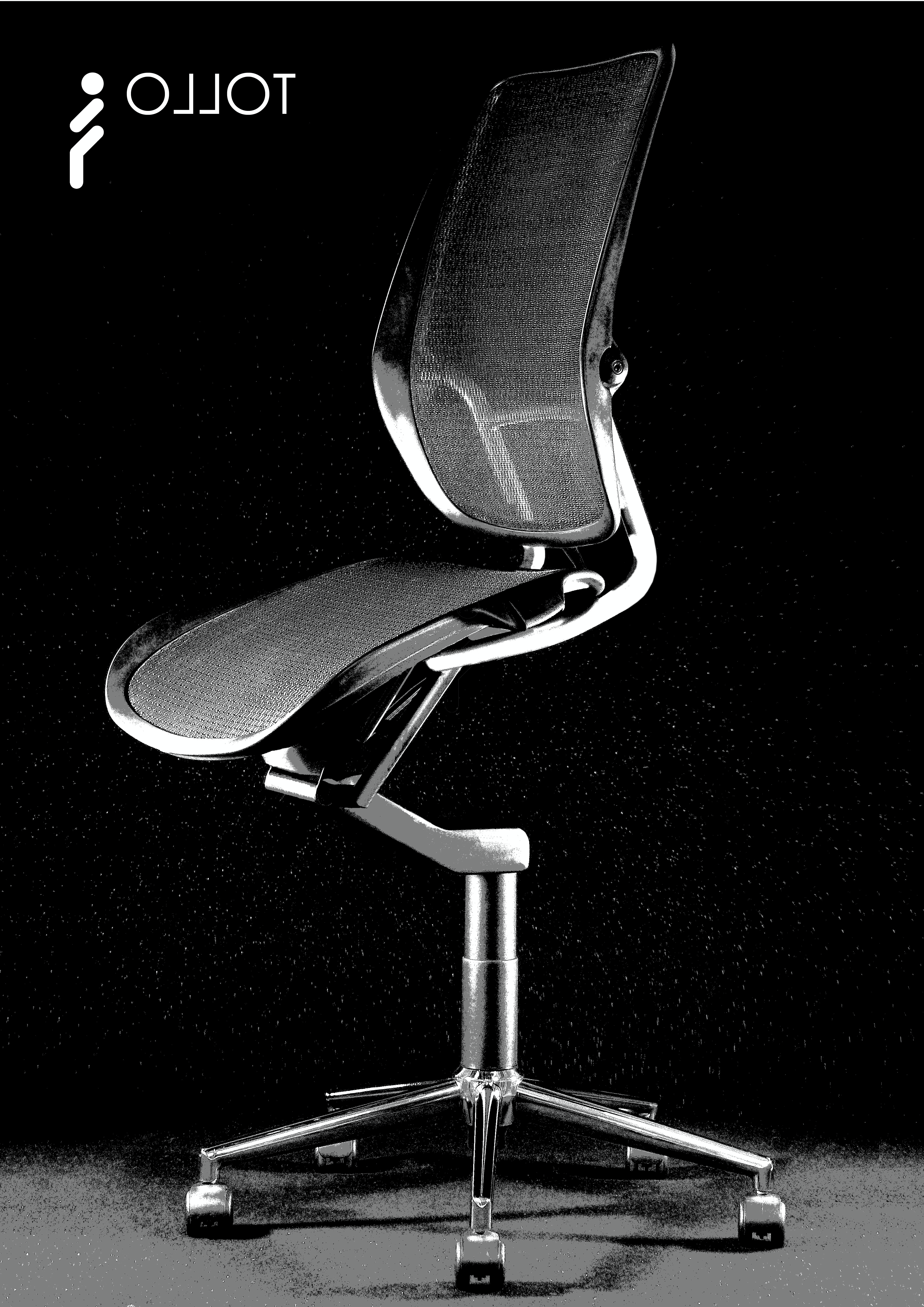
Our designer looking at a model of our patented T-Mech Mechanism in action.
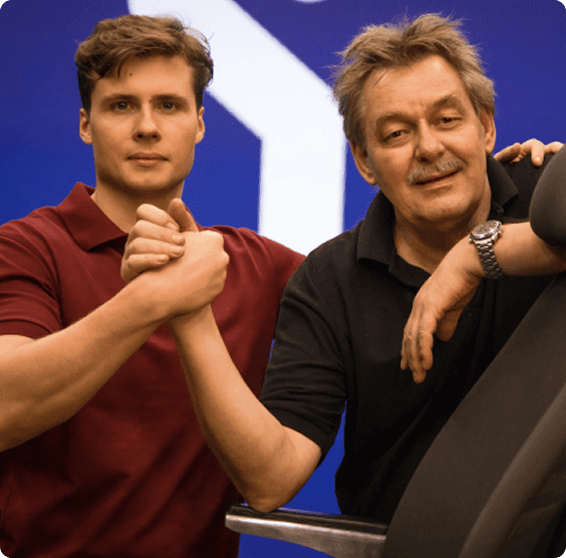
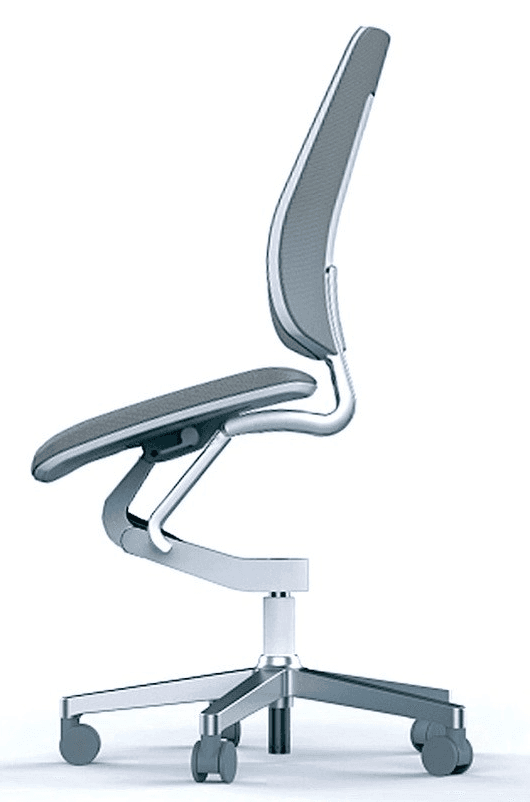
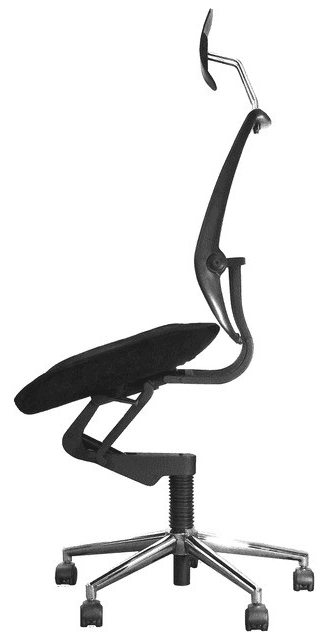
Michael and Klaus, Co-Founders of Levitask with one of the early prototypes of the Vision Chair.

2021

2021

2021

Start of a Company

Klaus needed someone to help bring his dream to life. He shared his vision with Michael Gotfrid, who was immediately captivated by the challenge and joined as partner marking the birth of the Levitask team in January of 2021.

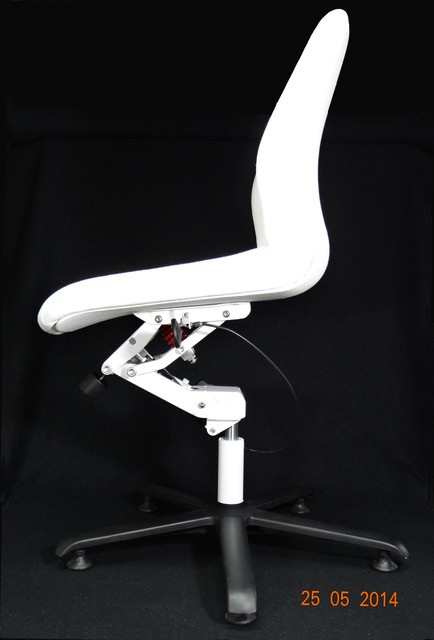
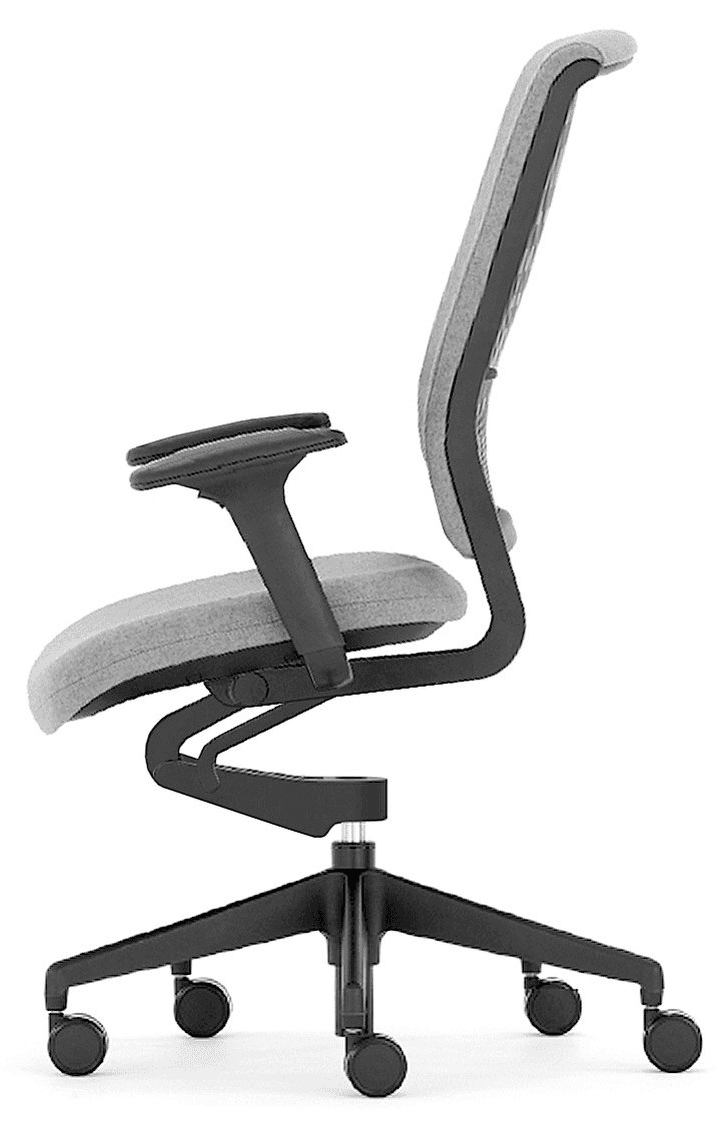
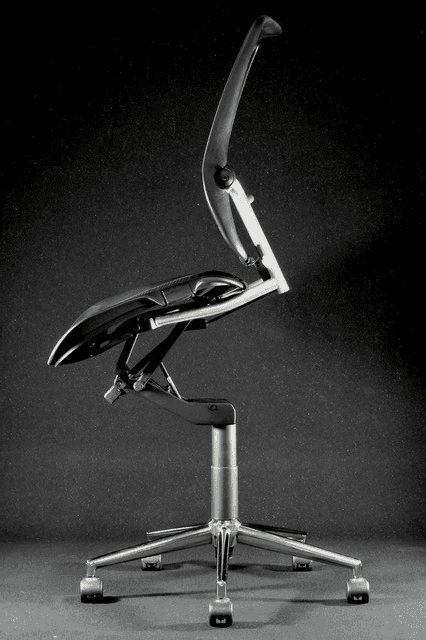
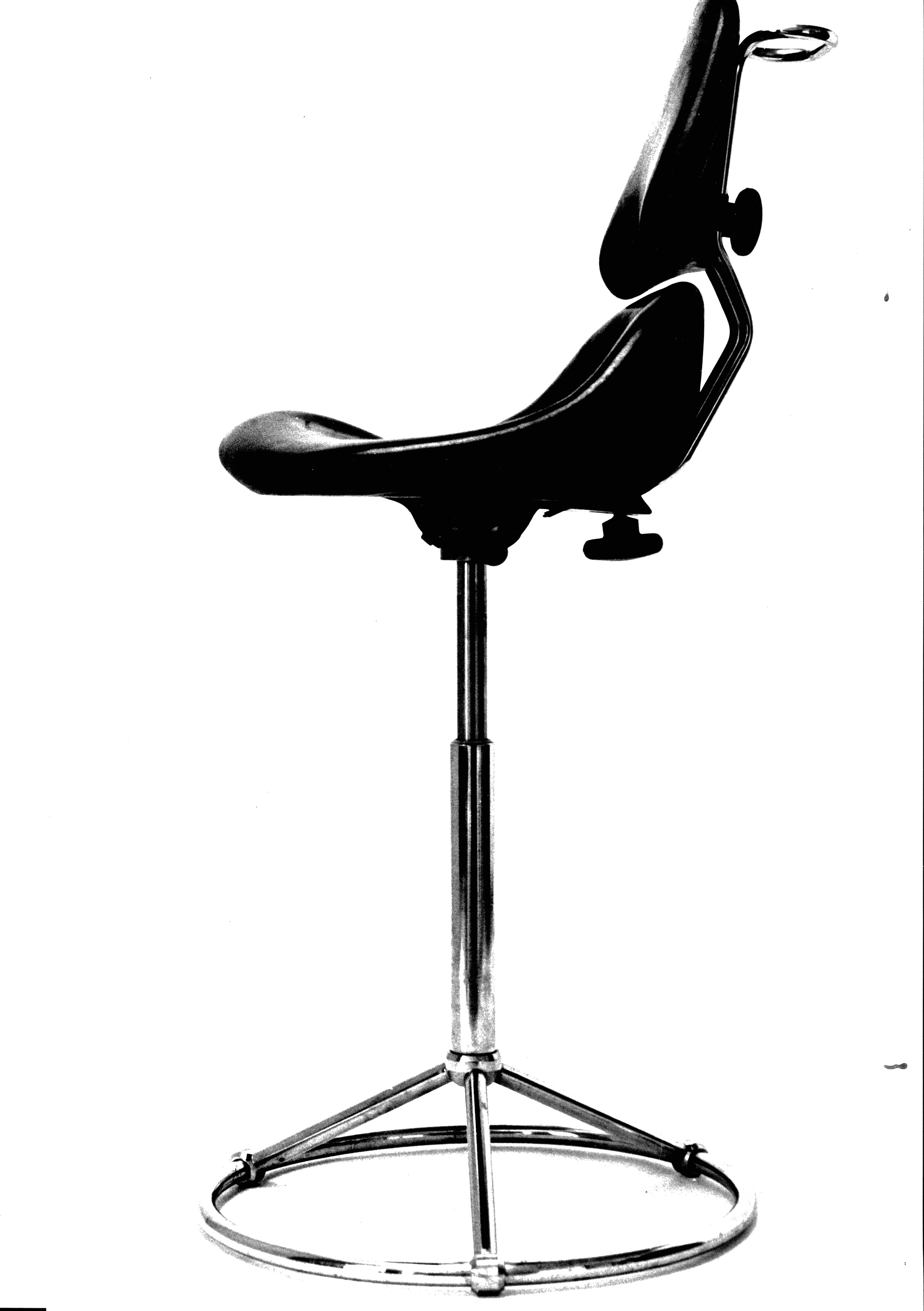
Prototypes Along The Journey
Meet the Team

Michael Gotfrid

CEO & Co-Founder

Michael Gotfrid

CEO & Co-Founder

Klaus Kummer

CTO & Co-Founder

Klaus Kummer

CTO & Co-Founder

Aku Korhonen

Operations

Aku Korhonen

Operations

Veronika Kostina

Creative Editor

Veronika Kostina

Creative Editor

Mary Pasamata

Social Media Manager

Mary Pasamata

Social Media Manager

Nadim Salhani

Advisor

Nadim Salhani

Advisor

Terapat Prapapanich

Advisor

Terapat Prapapanich

Advisor

The Culmination
of a Dream

Klaus’ journey exemplifies the power of unwavering passion and determination.
Even when his dream seemed so far off, he persisted. Each move edged him nearer to his dream, changing the way we sit, for the better.

But our work is only beginning.
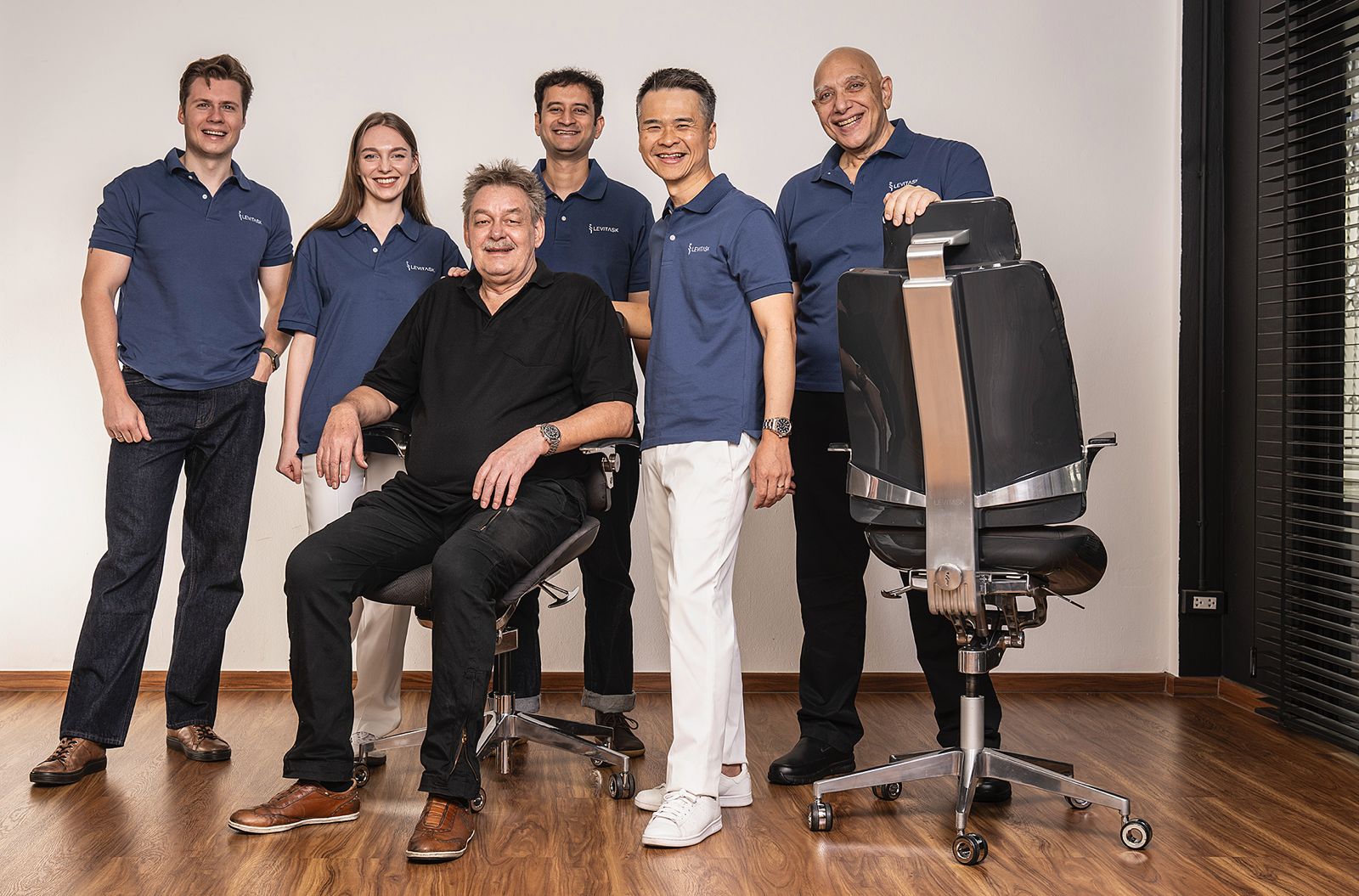
A group portrait of seven team members standing together outside, all wearing matching navy blue polo shirts and smiling.