
Posture Science
The 90-Degree Office Was Designed for Desks, Not People
The right-angle sitting posture is a furniture convention, not an anatomical rule. Here is where it came from, what seventy years of seating research actually examined, and why an open hip angle keeps returning as the better question.
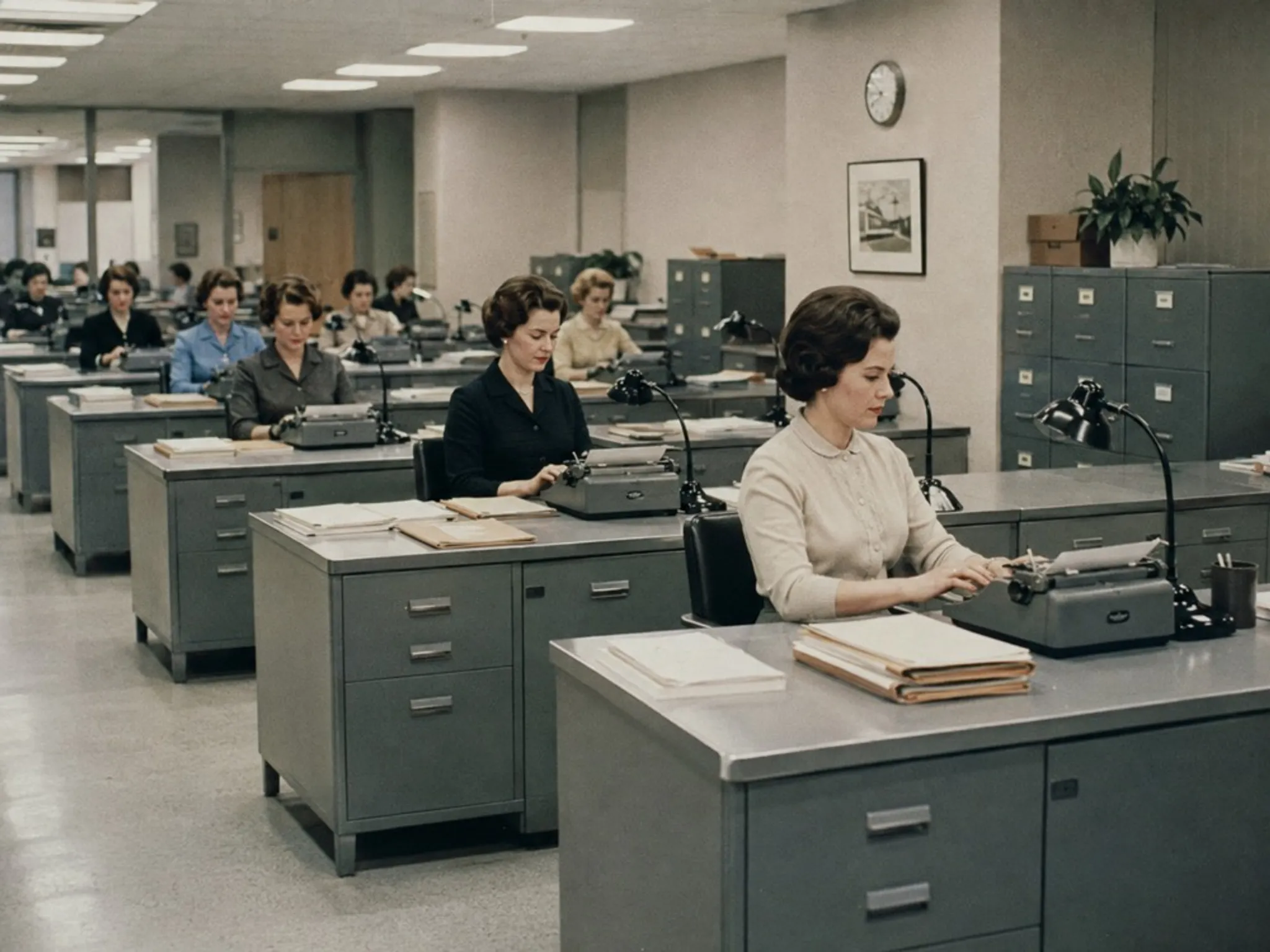
The right angle is one of the most familiar images in office life. Feet on the floor. Knees bent. Hips bent. Back upright. It looks orderly, practical, and easy to explain.
It is also a design convention.
The modern desk and chair developed around standard surfaces, standard heights, drafting habits, and the need to arrange people efficiently in rooms. The right angle made furniture easier to describe and reproduce. It did not emerge because the human body had voted for it.
That distinction matters. A convention can be useful without being a complete answer.
The office has always been designed around objects
The desk came first in many workplace decisions. A standard writing surface needed a standard chair height. The chair needed a stable footprint and a seat that could fit beneath the desk. The resulting posture became an instruction, repeated so often that it began to sound like anatomy.
It is not difficult to see why the model persisted. It works well enough for a person who sits upright for a short period and performs a single task. The problem is that modern work does not stay inside that moment. People read, type, call, sketch, review, turn, stand, and lean toward screens for hours at a time.
The furniture remains mostly fixed while the work becomes more varied.
What the research actually examined
The research behind open-angle sitting is not an argument for one magic posture. It is a collection of observations about what changes as the relationship between torso and thighs changes.
Keegan's radiographic work in 1953 examined the lumbar curve in different seated postures. Nachemson's disc-pressure measurements compared the loading of sitting and standing. Mandal argued that the seated working posture should move closer to a half-standing relationship. Bridger tested forward-sloping seats. Yim and colleagues later measured differences in neck-muscle activity across seat positions.
The methods were different, the years were different, and none was a study of the Vision Chair. What connects them is the mechanical question: what happens when a seated position opens beyond a conventional right angle?
That is why Levitask has collected the research in the Open Angle report. The useful conclusion is not that people should force themselves into a new pose. It is that furniture should make room for more than one relationship with a desk.
The limitation of a perfect diagram
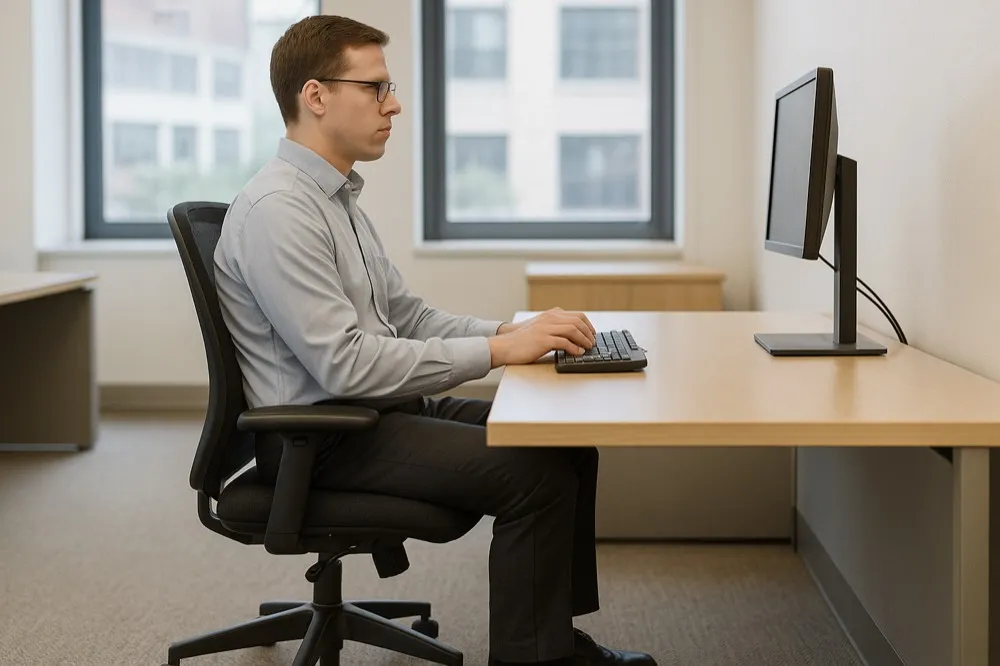
An ideal seated posture is easy to draw. A real workday is not.
Even people with carefully adjusted chairs move away from the reference position. They lean forward when attention narrows. They relax backward when attention widens. They shift when a conversation begins. The question for a chair is not only whether it supports the reference position. It is whether it stays useful when the person stops resembling the diagram.
This is where the right-angle office begins to feel incomplete. It is a good snapshot. It is not a full description of human work.
Good posture should not require willpower
There is a quieter problem with the right-angle model, and it is not really about the angle at all. It is that the model puts the burden on the person.
The standard answer to slouching is a well-shaped backrest and good lumbar support, and then a sort of unspoken instruction: sit in it properly. Which is fair enough, except that it makes good posture a thing you have to keep choosing, hour after hour, while your attention is on your work rather than your spine. Nobody wins that contest all day. You drift, you notice an hour later, you straighten up, and you drift again. The chair is not at fault. It is simply waiting for you to hold up your end.
An angled seat changes who is responsible. When the seat tips your pelvis forward, the open posture is not the disciplined option, it is the comfortable one, because it is the shape the geometry already puts you in. And slouching stops being a soft option: let your pelvis roll back on a forward-angled seat and you start to slide, which you notice immediately. The feedback is instant and physical rather than a rule you are meant to remember.
That is a different proposition from supporting a correct position. It is making the correct position the path of least resistance, so staying there costs no attention.
Designing for the workday we have
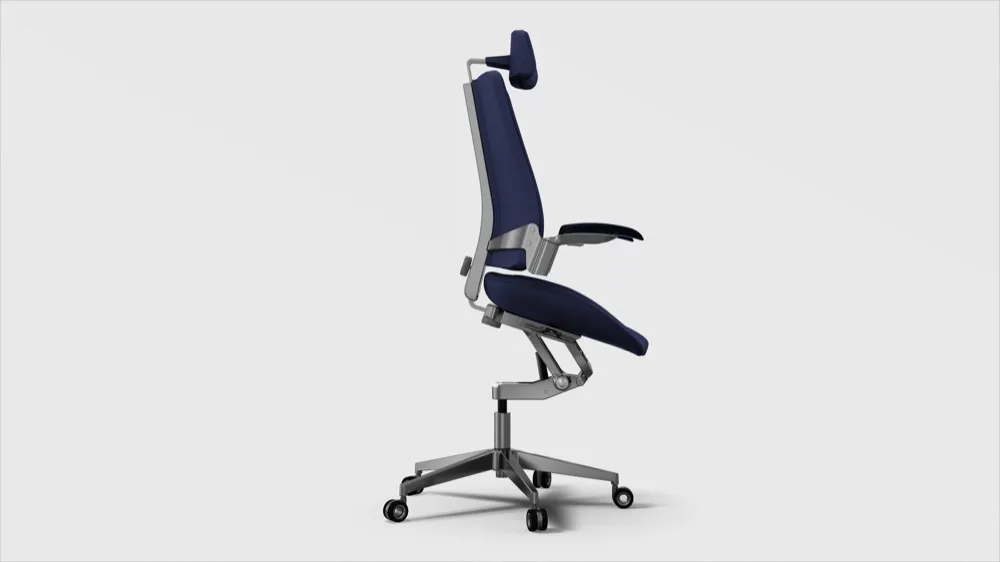
Elevated Seating is Levitask's response to that gap. Rather than adding a component to counteract the right angle, it removes the right angle: the Vision Chair's seat angles up to 18 degrees forward of flat, tipping the pelvis forward so the lumbar curve returns without anything pressing into the back. A patent-pending T-Mech™ moves that seat on an arc around the knee so the thighs stay supported, and the backrest is linked to the seat, so the open 115 to 125 degree hip angle is a property of the chair rather than a position you hold.
The practical consequence is that the seat sits you higher than a conventional one, which is why Elevated Seating assumes a height-adjustable desk rather than a standard fixed one. Opening the angle and raising the body are the same movement.
That is a design proposition, not a medical promise. It will not eliminate the need to stand, move, change tasks, or create a sensible workstation. It does ask a more useful question of office furniture: can the chair adapt to a person moving through a day, instead of asking the person to return repeatedly to the one position the furniture understands?
The 90-degree office was a sensible starting point. It does not have to be the final one.