
Buying Guide
Best Office Chair for Tall and Heavier Users With Back Pain: A Fit-First Checklist
Tall or heavier with back pain? Most chairs fit the middle of the bell curve. Judge any chair on seat height, depth, backrest reach, and pressure spread.

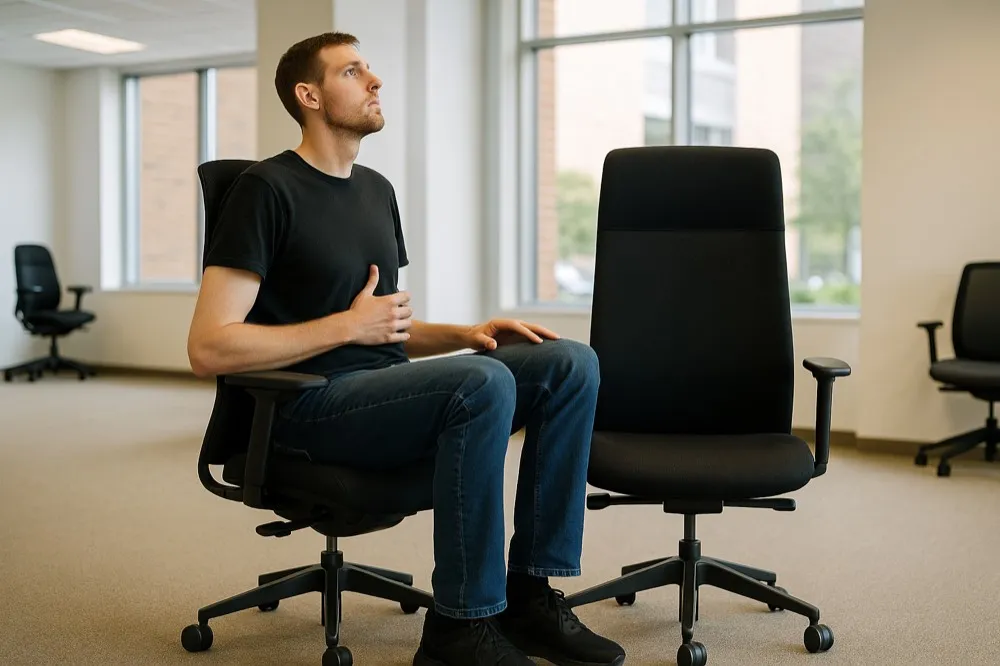
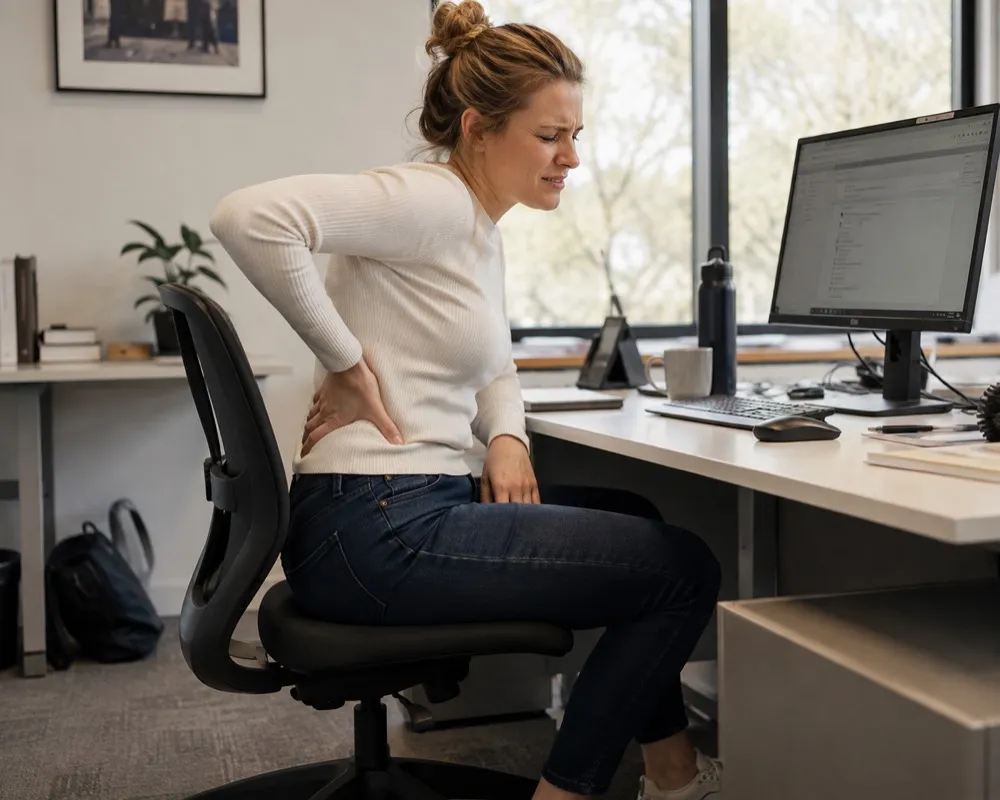
At 6 feet 3, you raise the seat to its top stop and your knees still float above your hips. Carry more weight and the story is different but ends the same way: the cushion that felt fine in the showroom bottoms out within months, the front edge digs into your legs, and by mid-afternoon your lower back is doing the work the chair was supposed to do.
Chairs are engineered for the middle of the bell curve, and your body is not there. What follows is the checklist to judge any chair on fit before you weigh a single feature, so you stop guessing and stop shipping boxes back. For taller and heavier desk workers, fit is the whole game, and it is the part most reviews skip.
Why do most office chairs fail tall and heavier bodies?
Makers build to the middle of the range because that is where the volume is. People under about 5 feet 4 and over about 6 feet 2 get turned away by the same design, from opposite ends. The seat, the backrest, and the adjustment ranges are all tuned for a body somewhere in between.
For a tall person, the failures stack up fast. The seat does not rise high enough to keep your knees below your hips, so your thighs angle up and your pelvis rolls back into a slouch. The seat pan is too shallow, so the front edge presses into your legs and the backs of your thighs get no support. The backrest stops short of your upper back, and the lumbar curve sits too low to catch your actual lumbar spine.
A heavier person hits different problems, just as real. A thin foam pad or a stretched mesh seat bottoms out, so you are effectively sitting on the frame. Pressure concentrates on the sit bones and tailbone instead of spreading across the whole seat. Cheap gas cylinders sink over months. And the adjustment levers can feel flimsy under real load.
Back pain is usually the symptom these fit failures add up to. A chair that does not support your specific frame leaves your muscles holding you up all day, and that load is measurable: Nachemson's disc-pressure measurements (Spine, 1981) found unsupported sitting raises pressure on the lumbar discs by about 40 percent compared with standing. The fix starts with fit, not with a longer feature list.
What should a tall or heavier person look for in a chair?
Get fit right before anything else. A chair with brilliant lumbar tech that does not physically fit your body is still the wrong chair.
Seat height range. You want your feet flat on the floor with your thighs level or tilted slightly down, and your knees at or just below hip level. A tall person needs a cylinder that reaches genuinely high, not a standard one that maxes out too soon. Check the published range, not the marketing.
Seat depth. Long thighs need a long seat. There should be room for two to three fingers between the front edge of the seat and the back of your knees. Many chairs solve this with a slide-adjustable seat pan, which is the feature to look for if you have long legs.
Backrest height and lumbar position. Taller torsos need a taller backrest that reaches the shoulder blades, and lumbar support that adjusts up and down so the curve meets your actual lower back. A fixed lumbar bump built for an average spine will miss you.
Seat support and pressure spread. A supportive foam seat that holds its shape spreads your weight across the whole thigh and pelvis. Mesh seats commonly cause tailbone numbness on long days for heavier users because the material sinks and loads the sit bones. Test how the seat feels after twenty minutes, not two.
Build for a wide range of body types. Look for a chair engineered and tested for larger frames rather than one that quietly assumes an average user. Trust the makers that are specific about who they fit.
Movement and hip angle. No single posture is good for eight hours, no matter how well it fits. A chair that lets you shift between reclining and a forward, upright working posture keeps blood moving and takes static load off your back. The angle itself matters too: Keegan's radiographic studies (The Journal of Bone and Joint Surgery, 1953) estimated the curve-preserving trunk-thigh angle at roughly 135 degrees, far more open than the rigid 90 degrees most chairs enforce.
Armrest and headrest adjustment. Broader shoulders and a taller frame need armrests that move in more than one direction, and, if you want head support, a headrest that travels up far enough to actually reach your head.
How do the fit criteria compare across chair types?
Different categories of seating handle the ends of the range differently. Treat this as a general map, not a ranking of brands.
| What to check | Why it matters for tall or heavier users | What to watch out for |
|---|---|---|
| Seat height range | Keeps feet flat and knees below hips | Standard cylinders top out too low for tall users |
| Seat depth or slider | Supports long thighs, no front-edge pressure | Fixed shallow pans dig into the legs |
| Backrest height | Reaches the shoulder blades | Short backs leave the upper spine unsupported |
| Adjustable lumbar height | Meets your actual lumbar curve | Fixed bumps land too low on tall spines |
| Seat surface | Even pressure, no tailbone loading | Thin foam and stretched mesh bottom out |
| Movement range | Reduces static load on the back | Rigid chairs lock you into one posture |
| Overall build | Holds up under real, daily load | Flimsy levers and sinking gas lifts |
Use the table as a scorecard. Take any chair you are considering and walk it down the left column. If it cannot clear seat height, seat depth, and backrest height for your body, the rest does not matter yet.
When should you see a professional?
A chair is a comfort and posture tool, not a medical device. It can support your body better through a long day, and many people find the right fit makes a real difference to how their back feels. It does not treat or cure a back condition.
See a qualified clinician if your back pain is severe, if it travels down your leg, if you have numbness or weakness, if pain wakes you at night, or if it lasts more than a few weeks. Those are signs to get assessed by a physical therapist or doctor, not to keep shopping for furniture. A good chair supports the work you do with a professional; it does not replace it.
The chair built for the ends of the range
Stand up for a moment. Your hips open, your spine settles into its natural curve, and nothing presses into the backs of your thighs. The Vision Chair is built to keep a taller, bigger body in that shape while seated. The seat tilts forward, up to 18 degrees, which sets the pelvis upright and lets the lower back keep its curve on its own, with no pad pushing it there. As you move, the patent-pending T-Mech™ swings the seat around your knee, so long thighs stay supported from edge to edge instead of hanging off a short pan. The backrest moves together with the seat, which is why the open hip angle, 115 to 125 degrees, holds whether you lean in or recline. And the seat is foam in two densities, softer where the pelvis lands and firmer at the edges, so your weight is cradled rather than loaded onto the tailbone. The design fits frames up to around 6 feet 4, with a headrest that rises to meet a taller head.
Worth flagging for taller bodies in particular. The forward seat angle raises your seated height, so the chair is built to pair with a height-adjustable desk. If you are already at the top of most chairs' height range, check that your desk can rise far enough to match, because a fixed desk will be the limiting factor rather than the chair.
It sits at a premium, professional tier, and it won an Innovation Award at Best of NeoCon 2026 in Chicago. If you want the movement logic before you weigh the fit, the complete guide to active sitting explains why holding one posture, however well it fits, is the real problem.
Frequently asked questions
What seat height do I need if I am over 6 feet 2?
Taller users generally need a seat that rises higher than a standard chair allows, so your feet stay flat and your knees sit at or just below your hips. Check the published maximum seat height against your leg length rather than trusting a chair to fit by default.
Is a mesh or foam seat better for a heavier person?
Many heavier users find a supportive foam seat more comfortable over long days, because stretched mesh can sink and concentrate pressure on the tailbone and sit bones. Foam that holds its shape spreads weight across the whole thigh and pelvis. Try both for more than twenty minutes if you can.
Can the right chair fix my back pain?
No chair treats or cures a back condition. A well-fitted chair with good support and room to move can make sitting more comfortable, and many people find it helps. If your pain is severe, radiates down a leg, or lasts more than a few weeks, see a qualified clinician.
What matters most, fit or features?
Fit. A chair loaded with adjustments that does not physically match your seat height, seat depth, and backrest height is still the wrong chair. Clear the fit basics first, then compare support, movement, and adjustability.
Keep reading
- Start with the broader money-page guide: how to choose the best ergonomic office chair for back pain
- If nerve pain is your issue: what to look for in an office chair for sciatica
- Understand the root mechanic: lower back pain from sitting, causes and desk fixes
- Zoom out to the full category: the complete guide to alternative seating