
Buying Guide
Best Office Chair for Sciatica: What to Look For Before You Buy
Nerve pain down the leg changes what a chair must do. The sciatica checklist: open hip angle, even seat pressure, a soft front edge, and room to move.
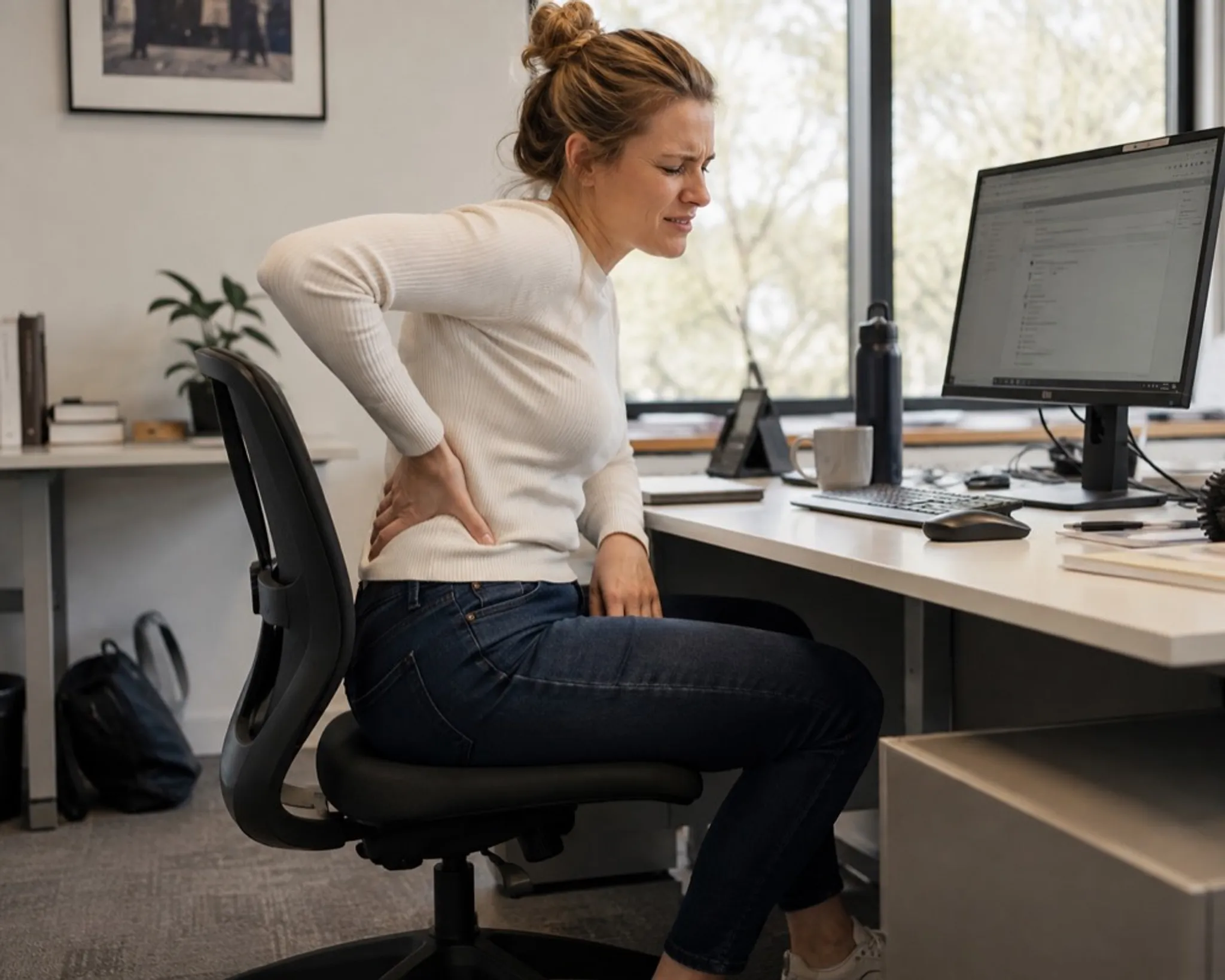
An irritated sciatic nerve grades chairs harshly. A seat most people would call firm presses a hot line from one buttock down the back of the leg. A front edge nobody else notices becomes the reason you stand up every twenty minutes. Reviews written for ordinary backs do not transfer, because the thing that matters most to you, where the seat puts its pressure, barely rates a mention in them.
Shopping with nerve pain calls for its own checklist. The criteria below cover the hip angle, the pressure map of the seat, the front edge, the lumbar support, and how easily the chair lets you move, in that order, because that is the order in which they affect an unhappy sciatic nerve. Plain language throughout, and none of it is medical advice.
Why do standard chairs make sciatica flare?
The sciatic nerve runs from the lower spine through the buttock and down the back of each leg, which means you spend the workday sitting directly on its route. A standard chair makes that worse in three ways at once, and the full mechanics are laid out in our guide to sciatica from sitting.
Closing of the hip angle comes first. Folded to roughly 90 degrees, the pelvis rolls backward, the lumbar curve flattens, and load shifts toward the front of the discs, the position an already irritated nerve root tolerates least. Pressure concentrates next: a thin pad or a hard pan stacks your weight onto the sit bones and the piriformis, right on top of the nerve, and a square front edge adds a pressure line across the back of the thigh. Stillness finishes the job, because nerves and discs depend on small constant shifts to keep fluid and blood moving.
A chair cannot remove the cause. What it can do is stop repeating the three aggravators for eight hours a day, and that is the standard to shop against.
What should you look for in a chair for sciatica?
Work down this list in order. The first three criteria do the most for nerve pain; the rest refine the result.
An open hip angle, held while you work. Look for a chair that keeps your hips open past 90 degrees in the posture you actually type in, not only in a deep recline. Keegan's radiographic work (The Journal of Bone and Joint Surgery, 1953) put the trunk-thigh angle that preserves the lumbar curve at roughly 135 degrees, far more open than the right angle most chairs enforce.
Even pressure across the whole seat. The goal is weight spread over the full length of the thigh and pelvis rather than stacked on the sit bones. Supportive foam that holds its shape does this well; deeply sunken hammock seats and thin pads over hard pans do not. Judge the seat after twenty minutes, because a pressure problem never shows in the first two.
A forgiving front edge. Many people with sciatica feel the front edge of the seat before anything else. A rounded, waterfall edge with some give keeps the chair from pressing a bar across the back of the thigh, exactly where the nerve runs.
Forward seat tilt. Bridger's controlled study of forward-sloping seats (South African Journal of Physiotherapy, 1985) found that seats tilted 10 to 15 degrees forward preserved the lumbar curve where flat and rearward-sloping seats flattened it. Forward tilt opens the hip without you thinking about it.
Lumbar support that adjusts. The inward curve of your lower back needs holding in the upright working posture, not only when you lean back. Support that moves up, down, and in means the curve meets your spine rather than an average one.
Movement without effort. Position changes are medicine for a compressed nerve. A recline that moves smoothly with light tension, rather than a lock you never touch, gets used all day instead of never.
How do the criteria stack up as a scorecard?
Run any chair you are considering against the left column before you look at anything else. If it fails on hip angle, pressure spread, or the front edge, stop there, because no feature further down rescues those three.
| What to check | Why it matters for sciatica | What to watch out for |
|---|---|---|
| Hip angle in the working posture | Keeps the pelvis upright and the lumbar curve intact | Chairs that only open the angle in full recline |
| Seat pressure spread | Weight across thighs and pelvis, not stacked on the nerve's path | Thin pads, hard pans, deeply sunken mesh |
| Front seat edge | No pressure line across the back of the thigh | Square, firm edges at thigh height |
| Forward seat tilt | Opens the hip and preserves the curve automatically | Flat pans fixed at horizontal |
| Adjustable lumbar support | Holds the inward curve while you actually work | Fixed bumps that land below your lumbar spine |
| Ease of movement | Interrupts the stillness that lets pressure build | Recline mechanisms too stiff to use casually |
When should you see a professional?
A chair is a comfort and posture tool, not a medical device. It can reduce how much a long day aggravates sciatica, and many people find the right seat makes the day noticeably easier. It does not treat or cure the condition underneath.
See a qualified clinician if the pain is severe or getting worse, if you have numbness or weakness in the leg or foot, or if pain wakes you at night or lasts more than a few weeks. Seek care immediately for any change in bladder or bowel control or numbness around the groin. A good chair supports the work you do with a professional; it does not replace it.
A chair designed to stay off the nerve's path
Stand up for a moment. Your hips settle at an open angle, your spine finds its inward curve, and nothing presses into the back of your thigh. The Vision Chair, built around a category called Elevated Seating, is designed to keep you there once you sit. The seat angles up to 18 degrees forward of flat, tipping the pelvis forward so the lumbar curve returns without a pad pushing into your back, and the backrest is linked to that seat so the open 115 to 125 degree hip angle holds across the chair's range rather than only at one setting. Its patent-pending T-Mech™ arcs the seat around the knee so the pelvis stays upright as you move, and a dual-density foam seat cradles it instead of pressing an edge under the thigh. No chair treats sciatica; this one is built to keep the aggravating position out of your day. To weigh the movement idea first, start with the complete guide to active sitting.
One practical point before you shop. The forward seat angle raises how high you sit, so this is a chair designed to work with a height-adjustable desk. At a fixed desk of about 73cm you end up reaching down to the work surface, which gives back the open hip angle you just paid for. If your desk height cannot change, that is worth knowing before you order rather than after.
Frequently asked questions
Is a soft or firm seat better for sciatica?
Neither extreme. A very soft seat lets you sink until pressure concentrates on the sit bones, and a hard one presses directly on the nerve's path. Supportive foam that holds its shape and spreads weight across the whole thigh tends to work best. Test for at least twenty minutes.
Can the right chair fix my sciatica?
No chair treats or cures sciatica. A chair with an open hip angle, even seat pressure, and a forgiving front edge can make sitting far less aggravating, and many people find that matters day to day. Severe, worsening, or long-lasting symptoms belong with a clinician.
How should I sit if I have sciatica?
Keep the hip angle open past 90 degrees, feet flat, thighs supported along their full length, and the lower back holding its natural curve. Then move: standing or walking every 30 to 45 minutes does more than any single position held perfectly.
Should I recline or sit upright with sciatica?
Alternate. A gentle recline unloads the discs, and an upright posture with an open hip keeps the curve while you work. The mistake is holding either one for hours, because stillness lets pressure build along the nerve no matter the angle.
Keep reading
- Start with the broader money-page guide: how to choose the best ergonomic office chair for back pain
- Movements to pair with the chair: chair stretches for sciatica
- Understand the root mechanic: lower back pain from sitting, causes and desk fixes
- Zoom out to the full category: the complete guide to alternative seating